Yes, hay can help grass grow, but with a big asterisk: it depends entirely on how you use it and what type you buy. Used correctly, hay acts as a protective mulch layer that keeps moisture in, moderates soil temperature, and gives grass seed a fighting chance to germinate. Used incorrectly, it smothers seedlings, introduces a wave of weed seeds, or sits wet and rots. So before you haul a few bales out to your bare lawn, let me walk you through what actually works and what doesn't.
Does Hay Help Grass Grow? How and When to Use It
Marcus Volkmann
24 Mar 2026
The direct answer: when hay helps and when it won't
Hay can help grass grow by creating better germination conditions over seeded or bare ground. It slows moisture loss, buffers soil temperature swings, and reduces erosion on slopes. Those are real, proven benefits. But hay is not the ideal choice for this job, and extension programs from Clemson to Maine explicitly prefer straw over hay for one simple reason: hay is often loaded with weed seeds. It's a livestock feed crop, not a mulch product, and the seeds from whatever plants were in that hay field come along for the ride.
Hay won't help, and will likely hurt, in these situations: you're using regular barnyard hay with no weed-free certification, you apply it too thick and it blocks light to emerging seedlings, you leave it on too long after germination, or you're working with already-compacted or waterlogged soil where the real problem is drainage, not coverage. In those cases, hay is a distraction from the actual fix.
How hay actually helps grass
When you place a light layer of hay over a freshly seeded area, a few things happen that genuinely improve germination odds. First, it slows evaporation from the soil surface. The top inch of soil is where grass seed sits, and it's also the layer that dries out fastest in sun and wind. A thin hay cover keeps that zone consistently damp without you needing to water every few hours.
Second, it moderates temperature. Bare soil heats up fast and cools fast. Mulch buffers those swings, which matters because most grass seeds have a fairly specific germination temperature range. Clemson Extension’s “Mulch Matters” notes that mulch helps moderate soil temperature, retain soil moisture, reduce erosion, and inhibit weed growth in established plant beds [Mulch buffers those swings](https://www.
clemson. edu/extension/carolinayards/action/mulch-matters. html). Third, it physically protects seed from washing away during rain or irrigation, which is especially valuable on slopes or sandy soils.
There's also a minor seed-to-soil contact benefit. A light mulch layer doesn't press seed into the soil, but it reduces the disturbance from rain impact that can scatter or bury seed too deep. All of these factors add up to a more consistent seedbed environment, which is ultimately what you need for good germination rates.
Does hay help grass seed grow specifically?
This is where people get tripped up. Some lawn care sources say flat out: never cover newly seeded areas with hay or straw. Others say a thin layer is exactly what you should do. The truth is that both camps are right depending on how you apply it. A thin, even layer of clean material helps. A thick, clumped application smothers everything underneath it.
The mechanism is straightforward: grass seed needs moisture and warmth to germinate, and it needs light as soon as it sprouts. Hay provides the first two if applied lightly, but blocks the third if you pile it on. Peer-reviewed research on mulch and seedling establishment confirms this: thick mulch layers can actually prevent germination for seeds that respond to light cues and temperature fluctuations. So the benefit of hay over seed is conditional on keeping the layer genuinely thin.
The weed seed issue is also especially relevant here. If you spread hay over a freshly seeded lawn, any weed seeds in that hay are getting exactly the same warm, moist conditions your grass seed is getting. You could end up with a patchy mess of crabgrass and thistle competing with your new turf from day one. That's why weed-free certified hay or straw is non-negotiable if you're going to use this method.
How to apply hay over seeded areas: step by step
Step 1: Choose the right material
If you can, skip general-purpose hay and buy certified weed-free straw instead. Straw is the byproduct of grain crops like wheat or oats after the seeds have been removed, so it carries far fewer weed seeds than hay does. Certified weed-free products have been inspected and verified to be free of noxious weed seeds, which is the standard used by forestry services and state DOTs for erosion control work. If hay is all you have access to or budget for, look specifically for "weed-free" on the label and ask your supplier whether it's been tested. Regular barnyard hay is a gamble.
Step 2: Prepare the seedbed first
Hay is a cover, not a fix for bad soil. Before you spread anything, rake the area, loosen the top 2 to 3 inches of soil, and remove any debris. If you're working with compacted clay or pure sand, address those issues first: topdress with compost, till it in, and then seed. If you skip soil prep and just throw hay on hard ground, you'll get poor germination regardless of the mulch.
Step 3: Seed first, then apply hay
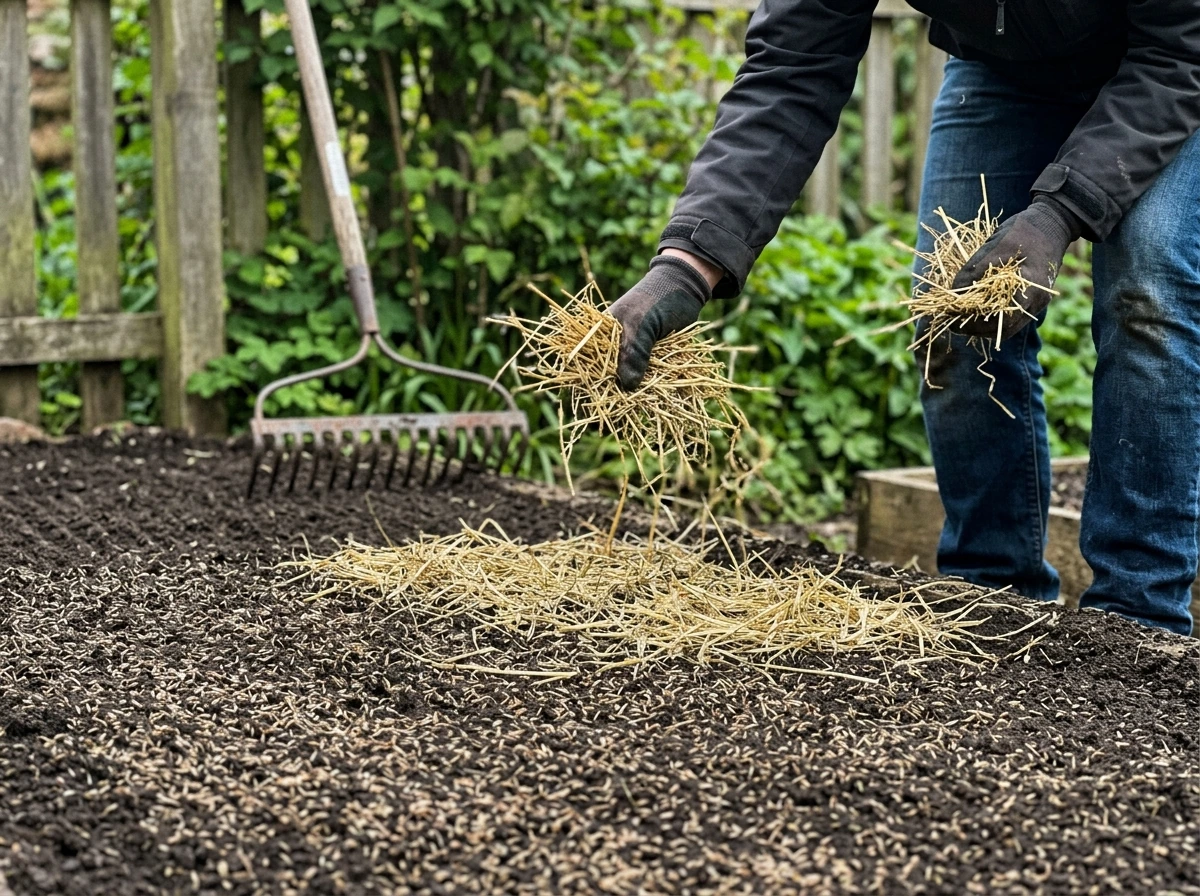
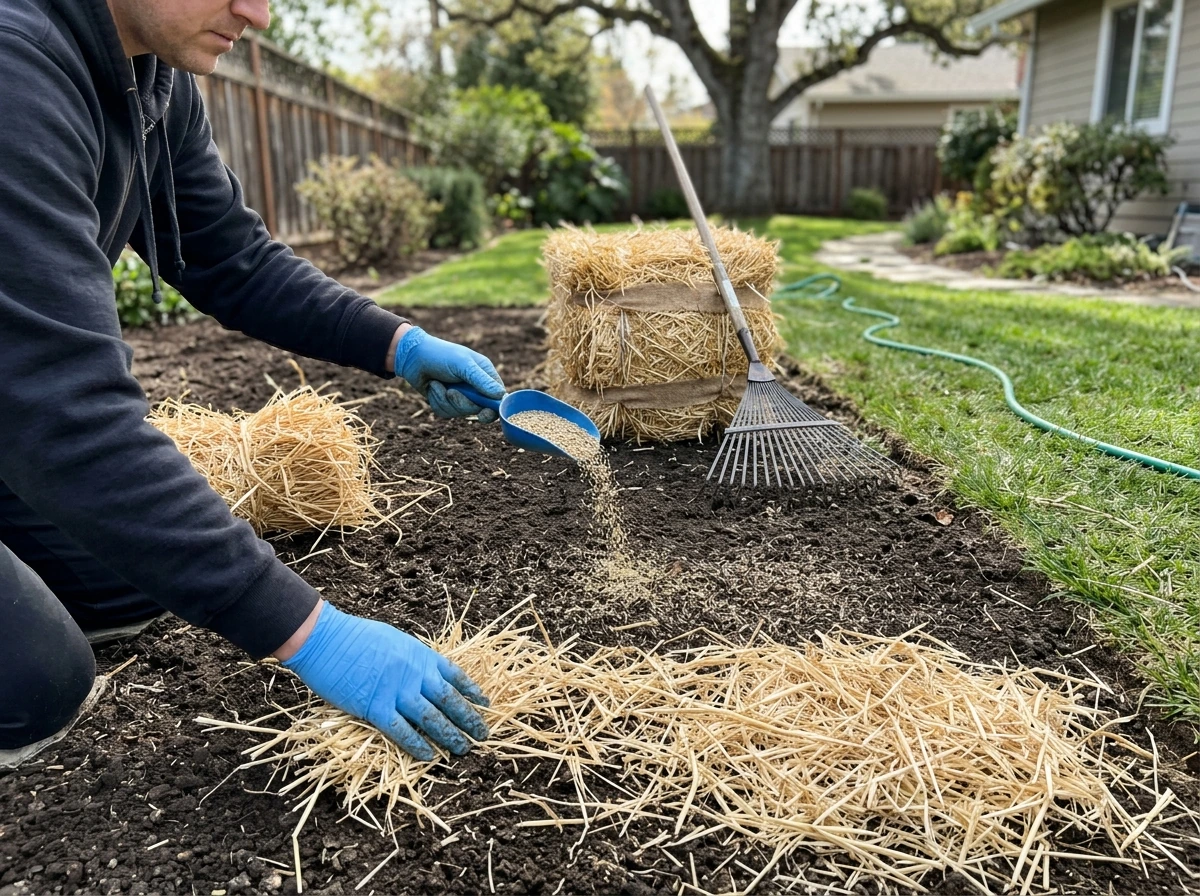
Spread your grass seed evenly over the prepared seedbed before laying any mulch. Lightly rake the seed in so it has soil contact, then apply the hay or straw on top. One bale of clean straw per 1,000 square feet is a common guideline used in professional turf establishment, and it's a good benchmark for hay too if you're committed to using it.
Step 4: Apply at the right thickness
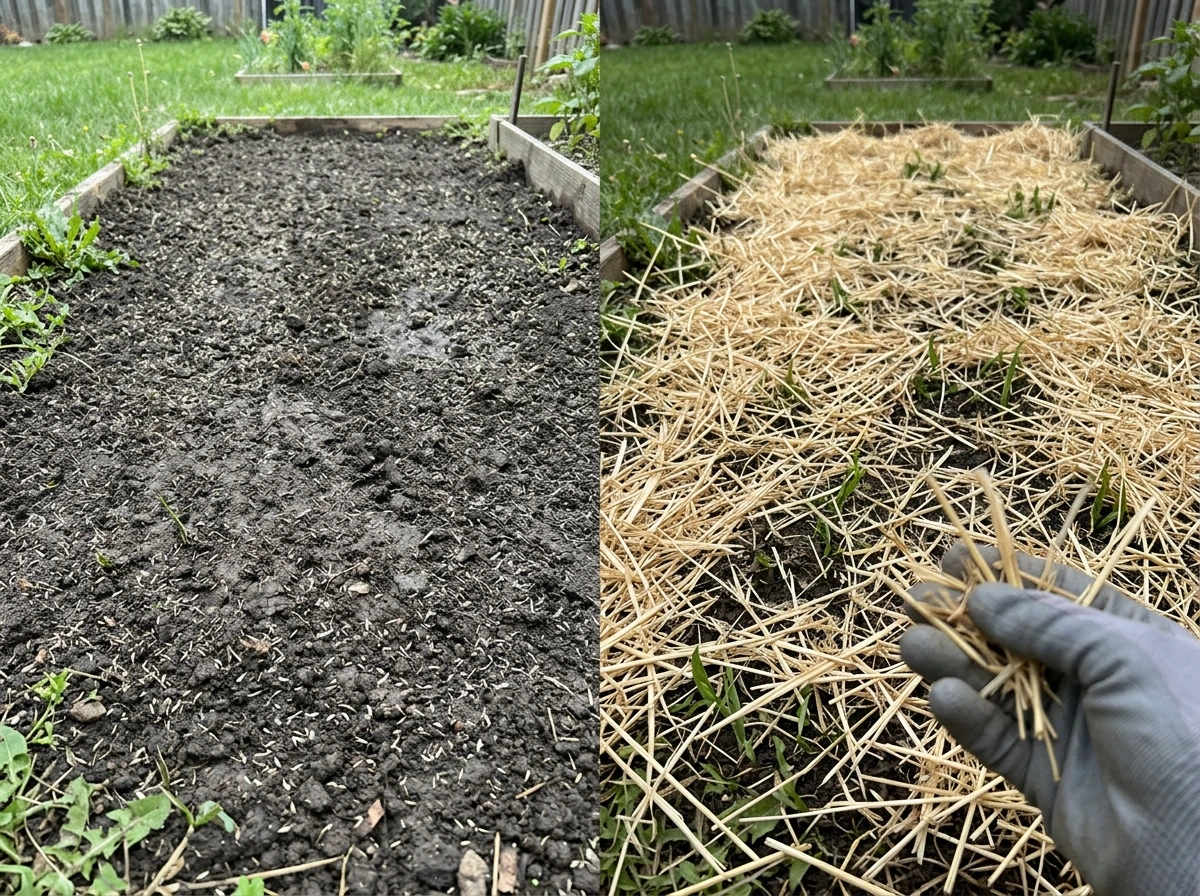
This is the most critical variable. University of Tennessee Extension guidance on turf establishment recommends a mulch layer of about 1/8 to 1/4 inch. That's thin enough to see soil through the mulch layer. You're aiming for a light scattering, not a blanket. If you can't see the soil at all when you look down at the mulch, it's too thick. Thick applications shade emerging seedlings and can trap moisture against the soil surface in a way that promotes fungal disease.
Step 5: Water consistently
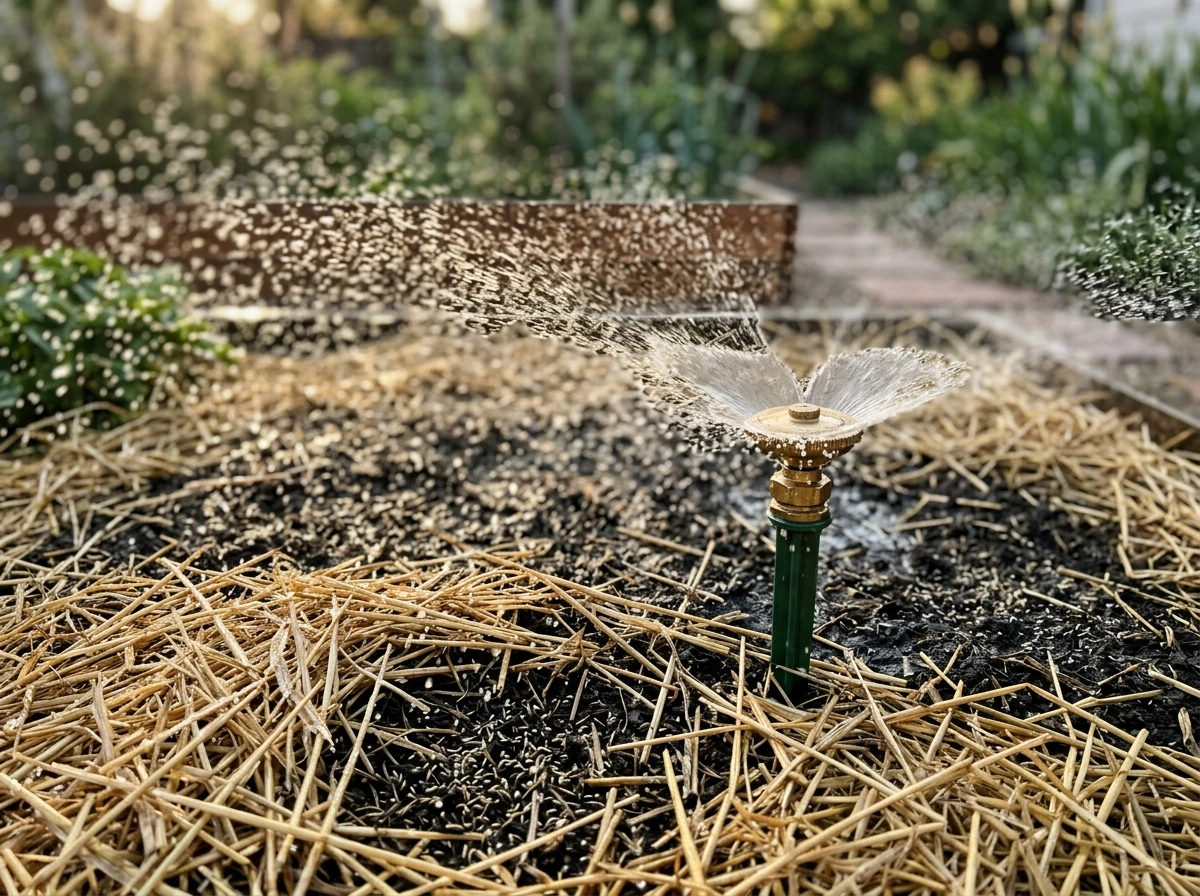
The whole point of the hay cover is to reduce how often you need to water, but you still need to water. Keep the seedbed consistently moist, not soaked. Multiple light waterings per day during the first week to two weeks of germination is better than one heavy soak. The hay helps hold that moisture in between waterings, which is where it earns its keep.
Step 6: Remove or thin the hay after germination
Once you see seedlings pushing through, it's time to act. If you applied a very light layer of clean straw, some practitioners leave it in place and let the grass grow through it. But with hay, and especially with any layer thicker than the minimum, you should rake it off or at least thin it out once germination is underway. Clemson Extension is direct on this: covers should come off soon after germination to prevent disease and let light reach seedlings. Leaving wet hay sitting on young grass is a recipe for damping off and other fungal problems.
Common mistakes that turn hay into a problem
- Applying hay too thick: anything over 1/4 inch starts to block light and trap excess moisture. A layer you can't see through is too heavy.
- Using uncertified hay with weed seeds: you'll grow a weed patch along with your grass, and those weeds will compete aggressively in the exact conditions you created for your new lawn.
- Leaving hay on too long after germination: wet hay sitting on emerging seedlings creates the warm, humid, low-light conditions that fungal diseases like damping off thrive in.
- Applying hay over unprepped soil: hay helps a good seedbed stay moist, but it can't fix compaction, drainage problems, or nutrient deficiency. If the soil isn't ready, the hay is decorative.
- Hay matting down: if you apply hay in clumps rather than spreading it loosely, it can mat flat and act more like a solid barrier than a permeable mulch. Break bales apart thoroughly before spreading.
- Skipping watering because you think hay handles it: hay slows moisture loss but doesn't create moisture. You still need to water regularly during germination.
Hay vs. straw vs. other mulch options
If you're weighing your options before committing to hay, here's a direct comparison of the most common materials used for seeded lawn areas.
| Material | Weed Seed Risk | Moisture Retention | Best For | Cost |
|---|---|---|---|---|
| Hay (regular) | High | Good | Erosion control if certified weed-free | Low to moderate |
| Straw (wheat/oat) | Low to moderate | Good | Lawn seeding mulch | Low to moderate |
| Certified weed-free straw | Very low | Good | Lawn seeding, sensitive areas | Moderate |
| Compost topdress | Very low (if mature) | Moderate | Soil improvement + seeding | Moderate to high |
| Erosion control blanket | None | Excellent | Slopes, high-erosion areas | Higher |
The recommendation here is clear: if you're seeding a lawn and you have a choice, use certified weed-free straw, not hay. Hay is better than nothing, but worse than straw in almost every relevant way for this application. If you're dealing with a slope or erosion risk, a straw erosion control blanket will outperform loose hay significantly. If your primary problem is poor soil quality rather than moisture retention, compost topdressing addresses the root cause rather than just covering it. does hay grow grass. does sugar help grass grow
When hay isn't the answer: alternatives worth trying
Sometimes the real barrier to grass growth isn't surface coverage, it's what's happening below the surface. If your lawn project is in a spot with very poor soil, heavy shade, sandy substrate, or drainage issues, no amount of hay on top is going to solve it. If you are wondering about sand specifically, it can affect germination, but the bigger factor is how you amend and keep the seedbed moist sandy substrate. Here's what to consider instead.
Compost topdressing
If you're working with depleted or sandy soil, a 1/4- to 1/2-inch layer of finished compost worked into the top couple inches before seeding will do more for germination than any mulch cover. Compost improves soil structure, water retention, and microbial activity, all of which create better long-term conditions for grass roots. This is the fix for the soil itself, not just the surface.
Erosion control products for slopes
If your main concern is seed washing away on a slope, a biodegradable erosion control blanket or netting pinned to the ground is significantly more effective than loose hay. Hay on a slope tends to slide or wash away itself in heavy rain, defeating the purpose. NC State Extension guidance on erosion control mulch notes that application rates and methods need to be adjusted based on site conditions, and slopes are specifically the situation where a more structured product outperforms loose mulch.
Addressing compaction and drainage first
Hard, compacted soil or soil that stays wet after rain is a grass killer regardless of what you put on top. Core aeration before seeding opens the soil up and lets water and roots penetrate. If you're in a low-lying area with chronic waterlogging, that's a drainage problem that needs a physical solution: grading, a French drain, or selecting a grass species tolerant of wet conditions.
Timing the project correctly
Sometimes the problem isn't the mulch or the soil, it's the calendar. Cool-season grasses like fescue and bluegrass germinate best in soil temperatures between 50 and 65 degrees Fahrenheit, which typically means early fall or early spring. Warm-season grasses like bermuda and zoysia need soil temperatures above 65 to 70 degrees. Seeding outside those windows and then wondering why germination is poor is a timing issue, not a hay issue. Check your soil temperature with an inexpensive thermometer before you seed and mulch.
Hay can be a useful tool in the right situation, but it's rarely the missing piece on its own. If you've seeded properly, at the right time, into reasonably prepared soil, a light covering of weed-free straw or hay will genuinely improve your germination rate. If the fundamentals aren't there, hay is just a delay. Get the soil right, time the project correctly, use the cleanest mulch material you can find, keep the layer thin, and pull it back once your seedlings emerge. That's the formula that actually works.
FAQ
How thick should hay be for newly seeded grass to avoid smothering seedlings?
Aim for a layer that is thin enough that you can still see the soil through it. If the mulch blocks all view of the ground, it is likely too thick. Keep it light and even, because clumps or matted patches raise the risk of damp, low-light conditions where seedlings struggle.
Can I use regular hay from a barnyard if I don’t see a weed problem in my yard?
It’s still a gamble. Hay can contain viable weed seeds even when your current lawn looks fine. If you cannot get “weed-free” or “weed-seed tested” on the label, treat it as higher-risk and expect a higher chance of weed flush right after germination.
Should I remove hay after my grass seedlings come up?
With straw, some people leave a very light layer in place, but hay generally should be pulled back or thinned once seedlings are established. Leaving thick or wet hay can increase the risk of damping-off and other fungal issues, and it also limits light reaching young shoots.
Does hay help if I’m trying to grow grass from sod-free bare patches without seeding?
Not reliably. Hay primarily improves conditions for seeds you already planted by helping retain moisture and moderating temperature. If there are no seeds to germinate, hay will not “create” grass growth, and any benefit is limited to erosion control and temporary surface protection.
How often should I water if I use hay over a newly seeded area?
Expect to keep the seedbed consistently moist, not soaked. Even with hay, you typically need multiple light waterings during the first week or two, then reduce gradually as germination firms up. The hay reduces evaporation, but it does not replace moisture needs.
Will hay work better for slopes, or does it wash away?
Loose hay can shift, slide, or wash away during heavy rain, reducing its effectiveness for erosion control and leaving seed exposed. For slopes, consider a structured biodegradable erosion blanket or netting, anchored to the ground, so the cover stays in place through storms.
What’s the best way to apply hay so it doesn’t clump and block light?
Use a thin, even broadcast rather than dumping bales or creating mats. If your material is thick, dry it, fluff it, and rake lightly to spread it uniformly. Clumps hold moisture against the soil, which increases disease risk and can suppress light to emerging seedlings.
Can hay improve grass growth in poor or compacted soil?
It can’t fix compacted drainage or nutrient problems on its own. Hay helps mainly at the surface, for seed germination conditions. For compacted or chronically wet soil, addressing aeration, drainage, or soil amendment (like compost topdressing) before seeding is usually more effective.
Does hay affect seed-to-soil contact and germination rate?
It can, depending on how you prep the area. If you rake the seed in for light soil contact before applying mulch, you usually get the benefit of moisture retention without burying seed too deep. If you skip raking and rely on hay to hold seed in place, germination often drops.
Is hay ever a good choice compared with straw?
Hay can be used only if you get weed-free certified material and you apply it extremely lightly. Straw is usually the safer default for seeded lawns because it is less likely to bring in weed seeds. If weed control and seedling health are priorities, straw is the better first option.
Next Articles
Does Epsom Salt Help Grass Grow? Bermuda Guide, Timing
Yes, sometimes for Bermuda if magnesium is low. Get timing, realistic results, safe application, and faster fixes if not
Will Sand Help Grass Grow? When It Works and How to Apply It
When sand helps or hurts lawns, how it improves drainage and soil structure, plus rates, steps, and troubleshooting.
Does Sugar Help Grass Grow? What to Do Instead
Learn if sugar helps grass grow and what to do instead with soil tests, proper nitrogen, watering, and mowing.