
If grass keeps dying under your trees no matter what you do, it's not bad luck and it's probably not a product problem. The tree is winning, and it will keep winning. The good news is there are real solutions that look great and actually hold up under mature trees. You just need to stop fighting the conditions and start working with them.
Landscaping Under Trees Where Grass Won’t Grow: A How-To Guide
Marcus Volkmann
24 Mar 2026
Why grass fails under trees (and why it's not your fault)
There are four things stacked against grass under a mature tree, and they usually all hit at once. Understanding each one helps you figure out which fix actually applies to your yard.
Shade that goes beyond just 'not enough sun'
It's not just that there's less light under a tree canopy. The quality of light changes too. Dense canopies filter out the blue spectrum and shift the light toward what's called 'far red,' which is far less effective for photosynthesis. Grass can't build the carbohydrates it needs to survive, let alone stay thick and green. Even shade-tolerant turf grasses like fine fescue need at least 4 hours of direct sunlight to hold on. Under a heavy tree canopy, you're often working with 1 to 2 hours, and that's simply not enough. No amount of fertilizing or watering will fix a light problem.
Root competition below the surface
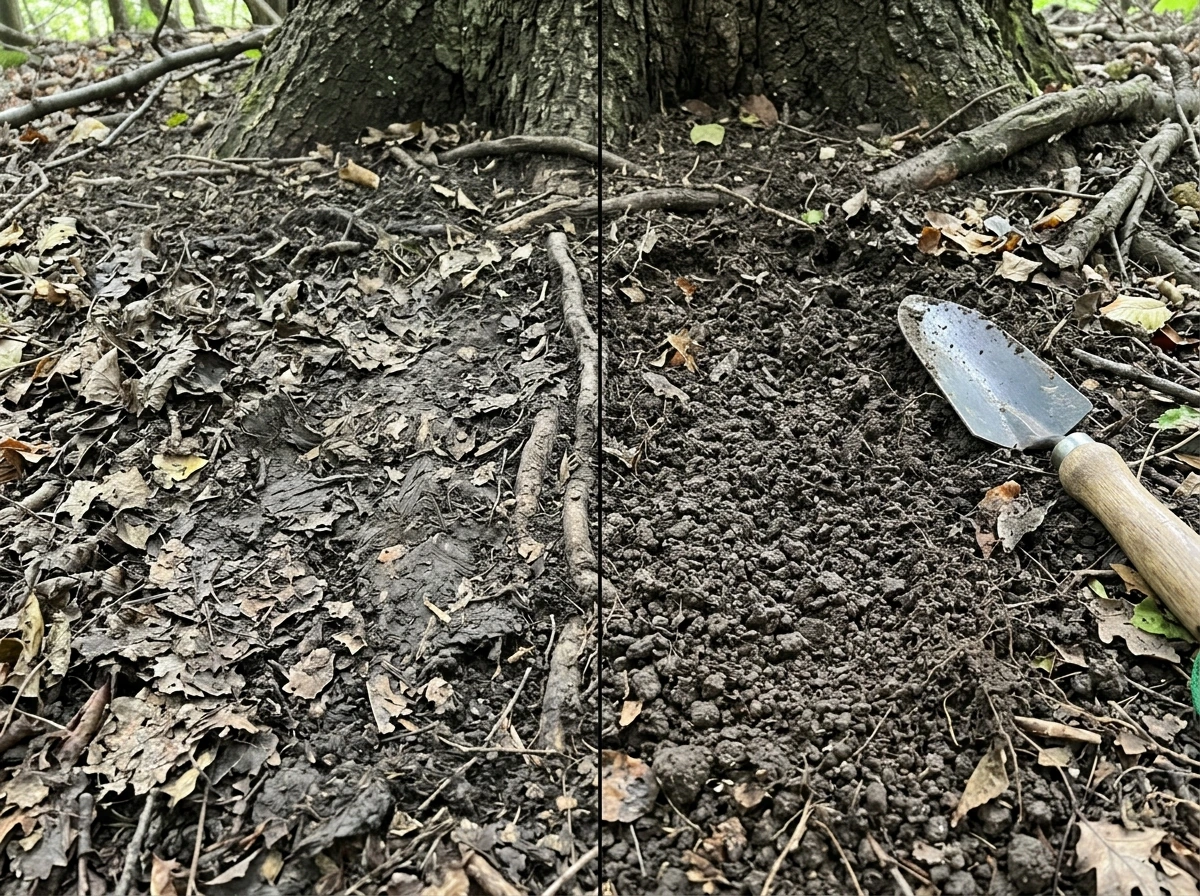
Most tree roots stay in the top 6 inches of soil, which is exactly where grass roots live too. Both are fighting for the same water and nutrients in the same narrow zone. In that competition, the tree always wins. Its root system is vastly larger and more aggressive. Grass in that zone ends up thin, stressed, and prone to disease because it's being outcompeted underground while also being starved of light above ground. It's a two-front losing battle.
Soil structure and moisture problems
Under a mature tree, the soil is often compacted from years of foot traffic, root displacement, and the tree's own organic matter buildup. Compacted soil reduces pore spaces, which restricts air and water movement in the root zone. Add to that the fact that tree canopies act like umbrellas, shedding rain away from the base, and you can end up with a dry, dense, poorly aerated patch where almost nothing thrives. The irony is that sometimes the grass dies from drought right under a tree that looks lush and healthy from the outside.
Allelopathy and leaf litter
Some trees, black walnut being the most notorious, release chemicals into the soil that actively suppress other plant growth. But even trees that aren't chemically aggressive create a leaf litter layer that smothers grass, alters soil pH, and blocks light at ground level if it's not managed. This isn't a reason to give up on under-tree landscaping, but it does mean you need to match your plant choices to the specific tree you're dealing with.
Assess your site before you plant anything
Before you buy a single plant or bag of seed, spend 20 minutes walking your site and answering four questions. The answers will tell you exactly what approach to take and save you from wasting money on the wrong fix.
How much light are you actually getting?
Go outside at different times of day and check whether the area under the tree gets any direct sun, and for how long. Do this on a clear day in the current season, since canopy density changes dramatically between spring and summer. If you're getting fewer than 4 hours of direct sun, grass is off the table. If you're between 2 and 4 hours, only the most shade-tolerant fine fescues have any chance, and even then you'll be fighting a maintenance battle. Under 2 hours, you're in groundcover and mulch territory, full stop.
What's the root situation like?
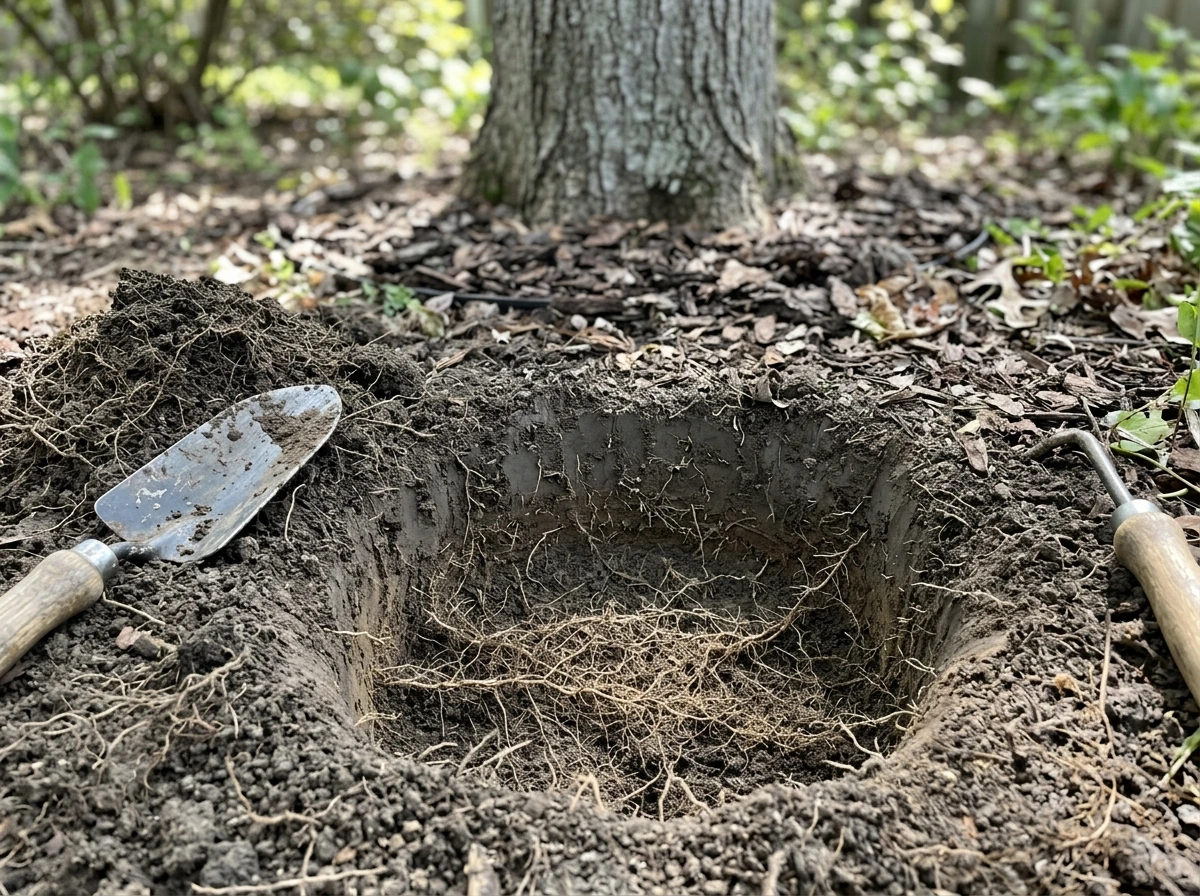
Dig a small test hole about 6 inches deep in a few spots under the tree. If you hit a dense web of roots immediately, or if you can't dig without chopping through roots, that zone is going to be very difficult to plant in. Surface roots are a sign that the soil is compacted and the tree is foraging near the surface for oxygen and water. The denser the roots you find, the more you need to lean toward a mulch-based approach rather than trying to install plants with their own root systems in that zone.
What tree are you dealing with?
Tree species matters a lot here. Shallow-rooted trees like maples, beeches, and willows create the most challenging zones because their surface roots compete aggressively and leave little room for anything else. Deep-rooted trees like oaks are comparatively easier to work under. If you have a black walnut, the allelopathic compounds it releases limit your plant options significantly. Knowing your tree type helps you predict root density and narrow down which groundcovers will actually survive there.
What does the soil look and feel like?
Grab a handful of soil and squeeze it. Does it clump like clay and stay compressed? Does it fall apart like sand? Or does it form a ball that crumbles easily, which would mean decent structure? Also check whether water puddles there after rain, since drainage problems compound everything else. Heavy clay under a tree is both compacted and likely to have poor drainage. Sandy or loose soil drains too fast and dries out. Either extreme makes plant establishment harder and points you toward soil amendment before installation.
Groundcovers and lawn substitutes that actually hold up under trees
These are the options I've seen work consistently in real yards, not just in catalog photos. The right choice depends on your light level, your climate zone, and whether you're okay with something that looks a little different from turf.
Shade-tolerant groundcovers (the reliable list)
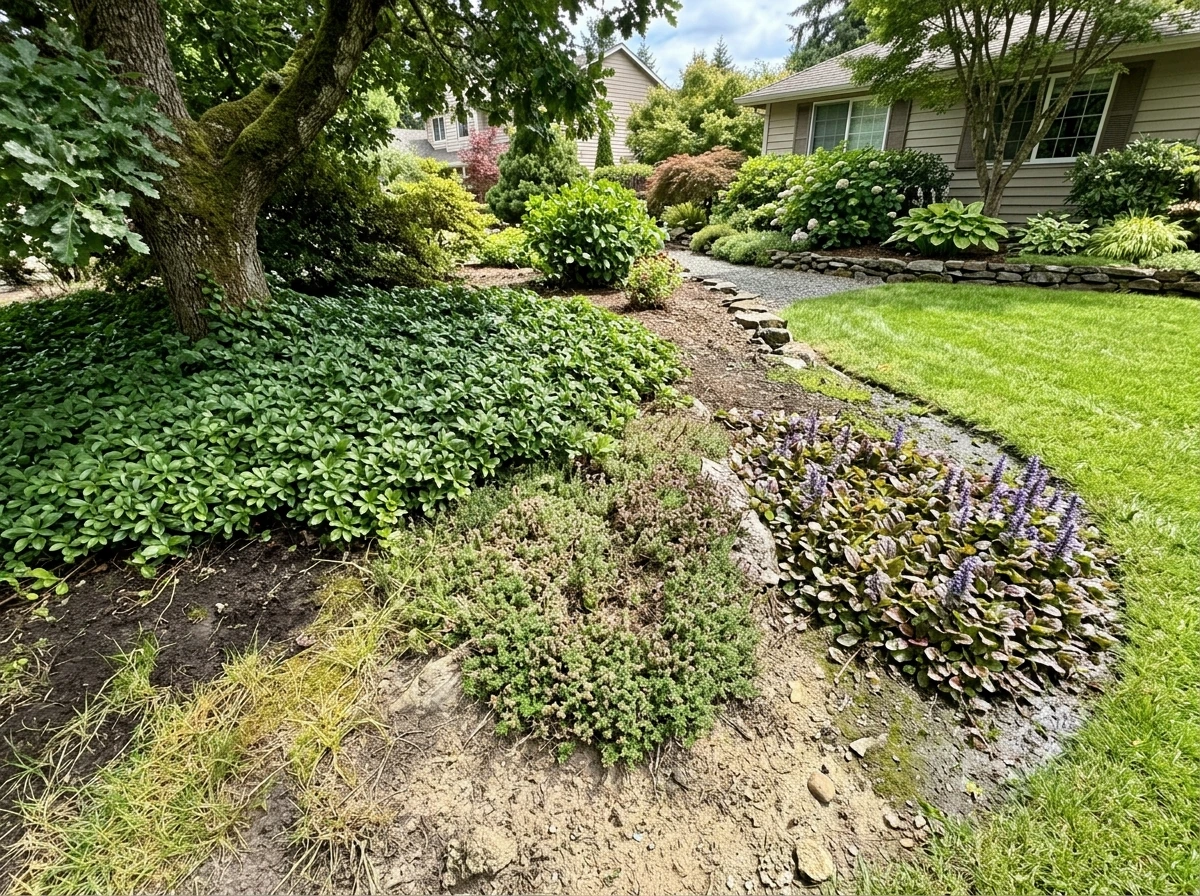
- Vinca minor (common periwinkle): One of the most reliable under-tree groundcovers available. Spreads well, handles dense shade, and produces small purple flowers in spring. It's evergreen in most zones and doesn't need much babying once established. Be aware it can spread aggressively beyond the bed.
- Pachysandra terminalis (Japanese spurge): A classic under-tree plant that forms a dense, weed-suppressing mat. It does best in zones 4 to 8 and genuinely thrives in the deep shade that kills everything else. It's slow to establish but very low maintenance once it fills in.
- Galium odoratum (sweet woodruff): A good choice for moist, shaded areas. It spreads to fill gaps, tolerates roots well, and has a soft, fine-textured look. Dies back in winter but returns reliably in spring.
- Tiarella (foamflower): A native perennial that handles deep shade and dry-ish soil. It's a good option if you want something that looks more intentional and garden-like rather than just 'filling a problem area.'
- Native ferns: Low maintenance, grow in dense shade, and pair well with mulch beds under trees. Many species are drought-tolerant once established and don't compete aggressively with tree roots.
- Fine fescue (if you have 3 to 4 hours of sun): If you're determined to have something grass-like, turf-type fine fescues are your best shot. They're the most shade-tolerant grass species available, but they still need meaningful light. Do not try this under a heavy canopy.
If you want a broader look at general lawn substitute ideas beyond tree zones, There's a lot more to explore in an article dedicated to ground cover for areas where grass won't grow..
Organic mulch as a long-term solution (seriously consider this)
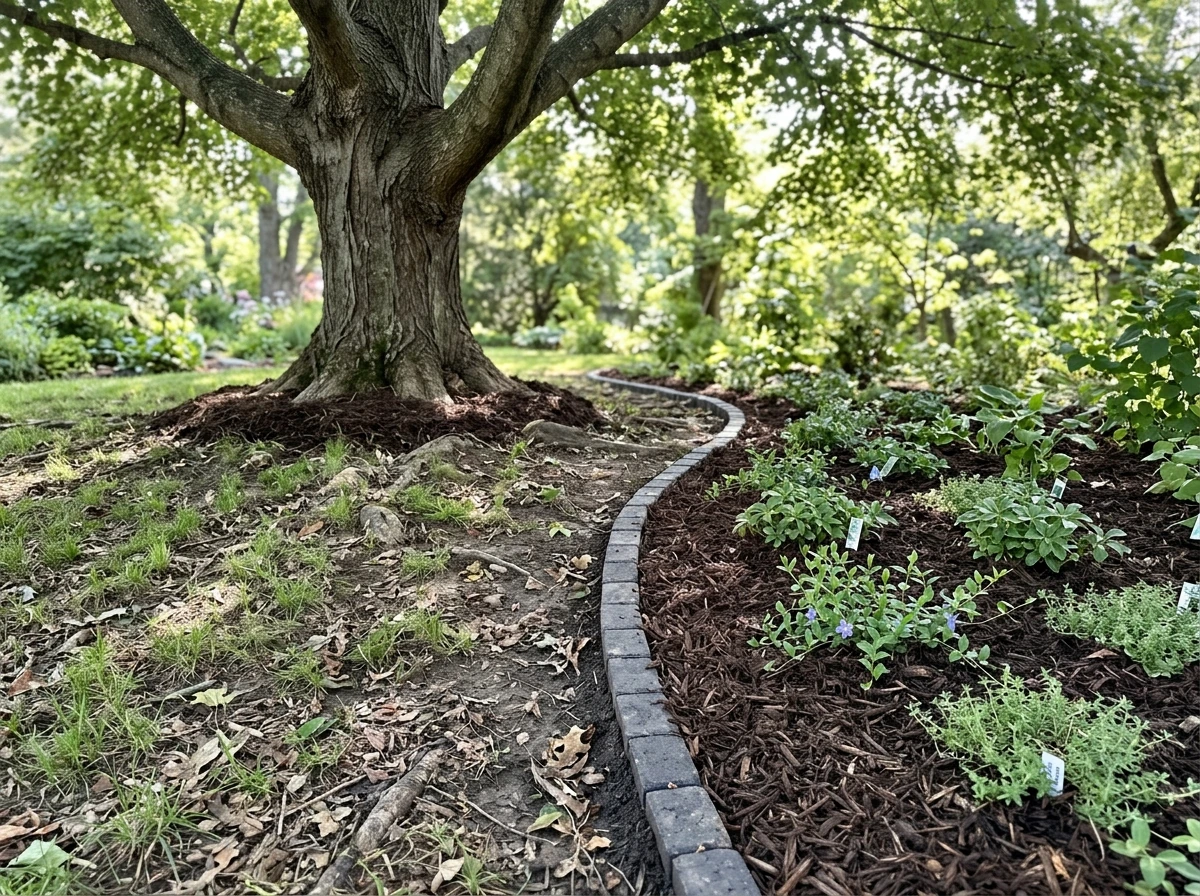
I know mulch feels like giving up, but for heavily shaded zones with dense surface roots, a clean mulch bed is often the smartest, most tree-friendly, and best-looking answer. It suppresses weeds, conserves moisture for the tree, moderates soil temperature, and completely sidesteps the problem of trying to grow anything in an impossible zone. University extension guidance consistently recommends mulching the critical root zone of mature trees rather than fighting to maintain turf there. Done correctly, it also protects those surface roots from mower and foot traffic damage.
Soil prep and amendments under trees (without harming the tree)
This is where a lot of people cause more damage than they fix. The goal under a mature tree is to improve conditions without disturbing roots or changing the grade around the trunk. Here's how to do it right.
Work with shallow amendments, not deep excavation
Do not rototill, deeply dig, or bring in significant amounts of fill soil under an established tree. Changing the grade around a tree base, even by a few inches, can seriously disturb the root-soil relationship and damage or kill the tree. Instead, work with thin top-dressings of compost applied at no more than half an inch at a time. Over a season or two, this improves organic matter content and soil structure without suffocating roots or burying the root flare.
Mulch depth and placement: get this right
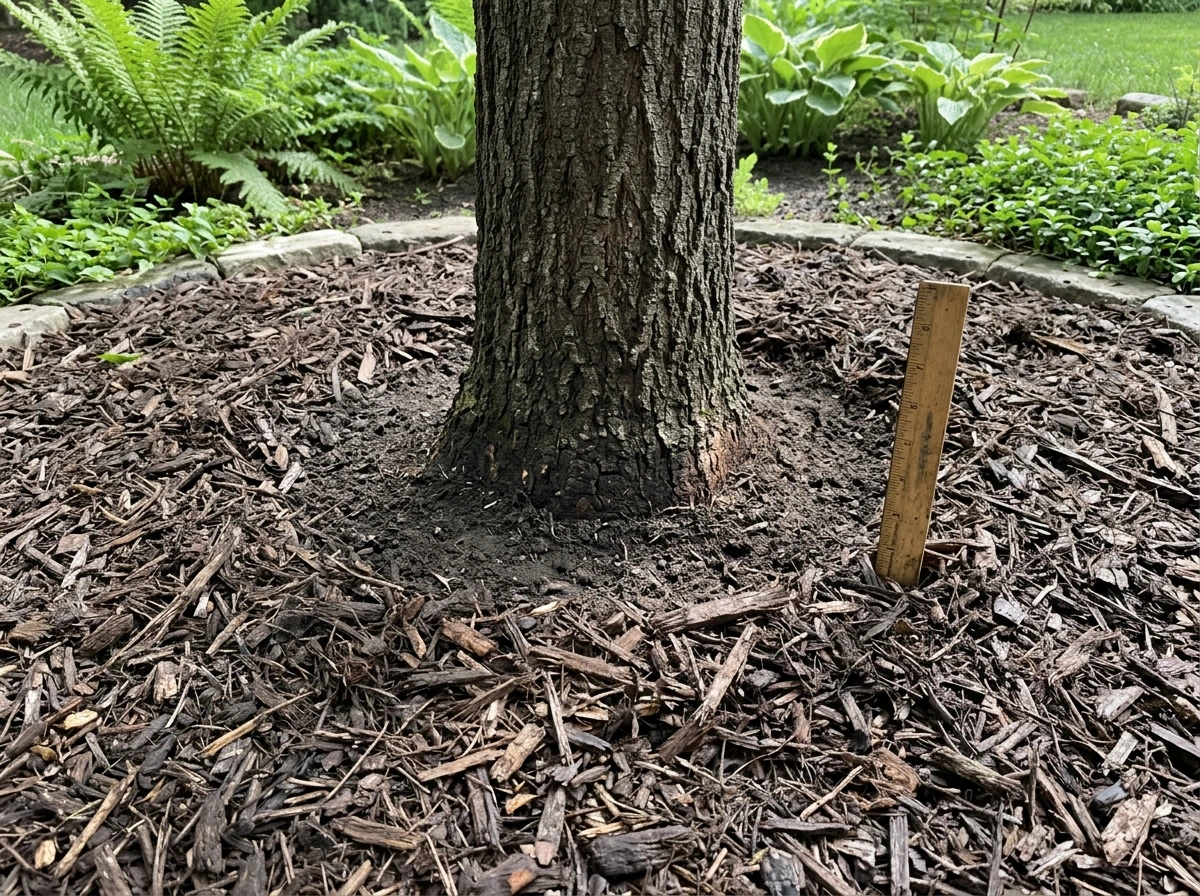
Apply organic mulch (shredded bark, wood chips, or composted leaves) at a depth of 2 to 4 inches across the bed area. Cornell’s turf and weed ID guidance notes that mulch is commonly maintained around 2 to 4 inches and should be kept away from the root flare and trunk to prevent “volcano” conditions. Keep the mulch at least 2 to 4 inches away from the trunk, and never pile it up against the bark in a cone shape. That practice, called volcano mulching, is one of the most common and damaging mistakes in home landscaping. It traps moisture against the trunk, cuts off oxygen to the root collar, and can cause rot and long-term tree decline. The mulch layer should be flat and even, not mounded, with the root flare of the tree clearly visible.
pH and fertility considerations
Get a basic soil test before you amend. Some trees, like oaks, prefer acidic soil, and their leaf litter reinforces that acidity over time. If you're planting groundcovers that prefer a neutral pH, you may need to adjust with lime. But don't guess. Over-liming under an acid-loving tree causes its own problems. A simple test kit or county extension soil test, usually available for a few dollars, tells you exactly what you're working with before you spend money on amendments.
Light canopy pruning can change everything
If your site assessment showed very low light, consider having an arborist thin the canopy before you invest in planting. Selectively removing some interior branches to open up the canopy can meaningfully increase the light reaching the ground, sometimes the difference between a zone where nothing survives and one where shade-tolerant groundcovers establish well. This isn't always necessary, but if you have a dense, older tree and a budget for one professional investment, canopy thinning often delivers the best return.
Seed vs. sod vs. plugs vs. mat systems: which one wins under trees
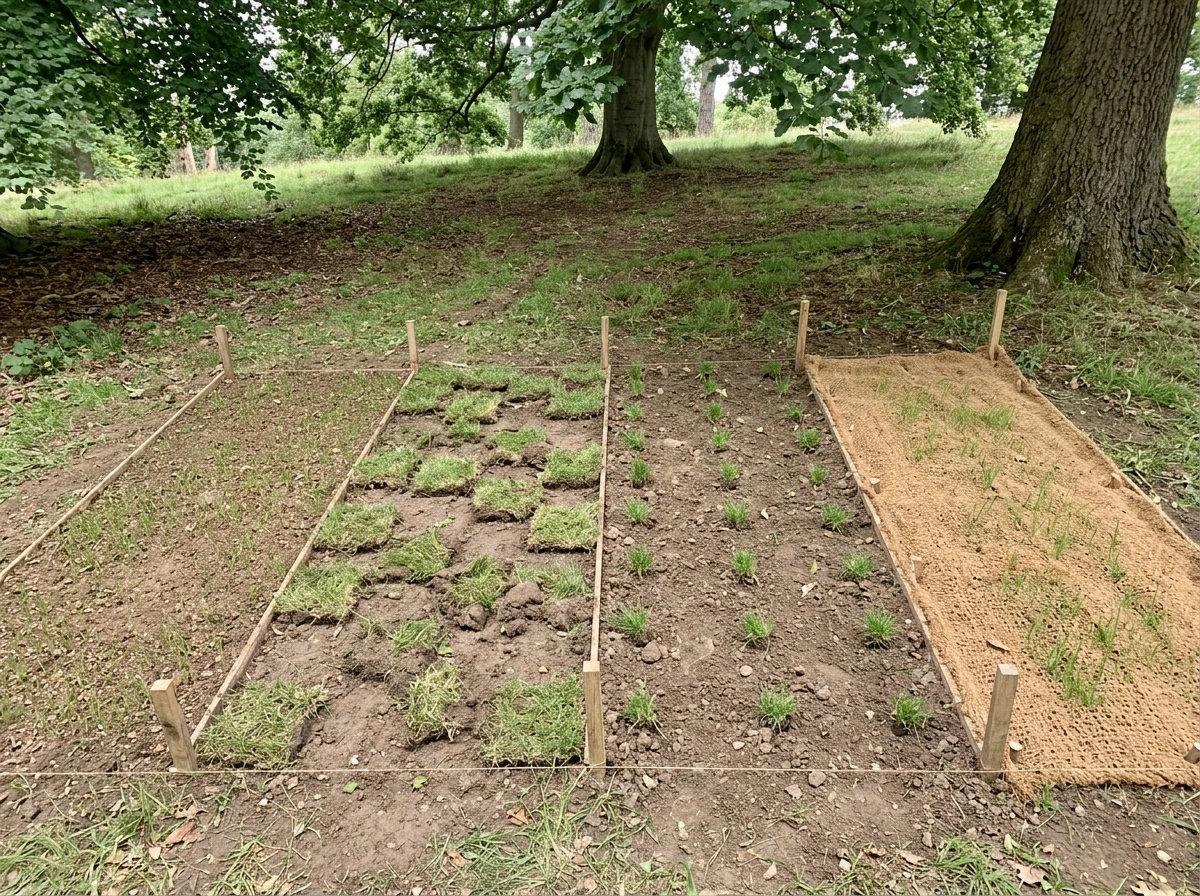
People ask me this a lot, and the honest answer is that the installation method matters much less than whether the plant you're installing is actually suited to the site. That said, each method has real trade-offs under trees specifically.
| Method | Difficulty | Speed to establish | Best use case under trees | Main risk |
|---|---|---|---|---|
| Seeding | Low to moderate | Slowest (6 to 12 months for coverage) | Fine fescue in moderate shade zones; some groundcovers from seed | Poor germination in dry, root-dense soil; seed displacement from rain and irrigation |
| Sod | Moderate | Fastest apparent coverage | Shade-tolerant turf grass in transitional zones (3 to 4 hours sun) | Sod roots struggle to penetrate compacted, root-dense soil; high failure rate in dense shade |
| Plugs | Moderate | Medium (3 to 6 months to fill in) | Ideal for groundcovers like vinca, pachysandra, ajuga; work around surface roots | Requires consistent moisture during establishment; slow visual payoff |
| Engineered mat / biomat systems | Moderate to high | Immediate erosion and soil protection | Slopes under trees; areas needing immediate soil stability before groundcover fills in | Cost; requires proper pinning and edge burial; not a permanent standalone solution |
For most homeowners dealing with a mature shade tree and poor turf coverage, plugs are the most practical starting point. Mississippi State Extension notes that vegetative planting like plugs generally takes more time to establish than seed, so plan your timeline accordingly blank" rel="noopener noreferrer">plugs are the most practical starting point. You can place them strategically between surface roots without major soil disturbance, and shade-tolerant groundcovers like pachysandra or vinca spread from plugs to fill in gaps over one to two seasons. Seeding is cheaper but far less reliable in the dry, compacted, root-filled conditions under most mature trees. Sod looks great on day one but frequently fails under heavy canopies because the sod layer can't knit into the existing soil properly.
Engineered mat systems, which use 3D coir or similar materials to stabilize soil and support seed establishment, are most useful on slopes under trees where erosion is a problem before groundcover fills in. They're pinned with U-shaped stakes and buried at the edges, and they provide immediate protection while plants establish. They're worth the extra cost if you're on a grade and dealing with washout, but on flat ground they're usually overkill.
Long-term care that fits under-tree reality
Once you've got something established under your tree, the maintenance approach is different from a regular lawn. Here's what actually works.
Watering strategy
Water deeply and infrequently rather than shallowly and often. Shallow, frequent watering creates wet conditions at the soil surface without reaching the tree's deeper roots, which can cause imbalanced conditions and promote fungal problems in the low-light environment. Water in the morning so leaves and stems dry out during the day. Avoid late-evening watering under trees, since the shade keeps humidity high and free moisture on foliage overnight is a setup for disease. If your tree canopy is shedding rain away from the base, you may need to water the bed itself even when it looks like it rained.
Weed control and edging
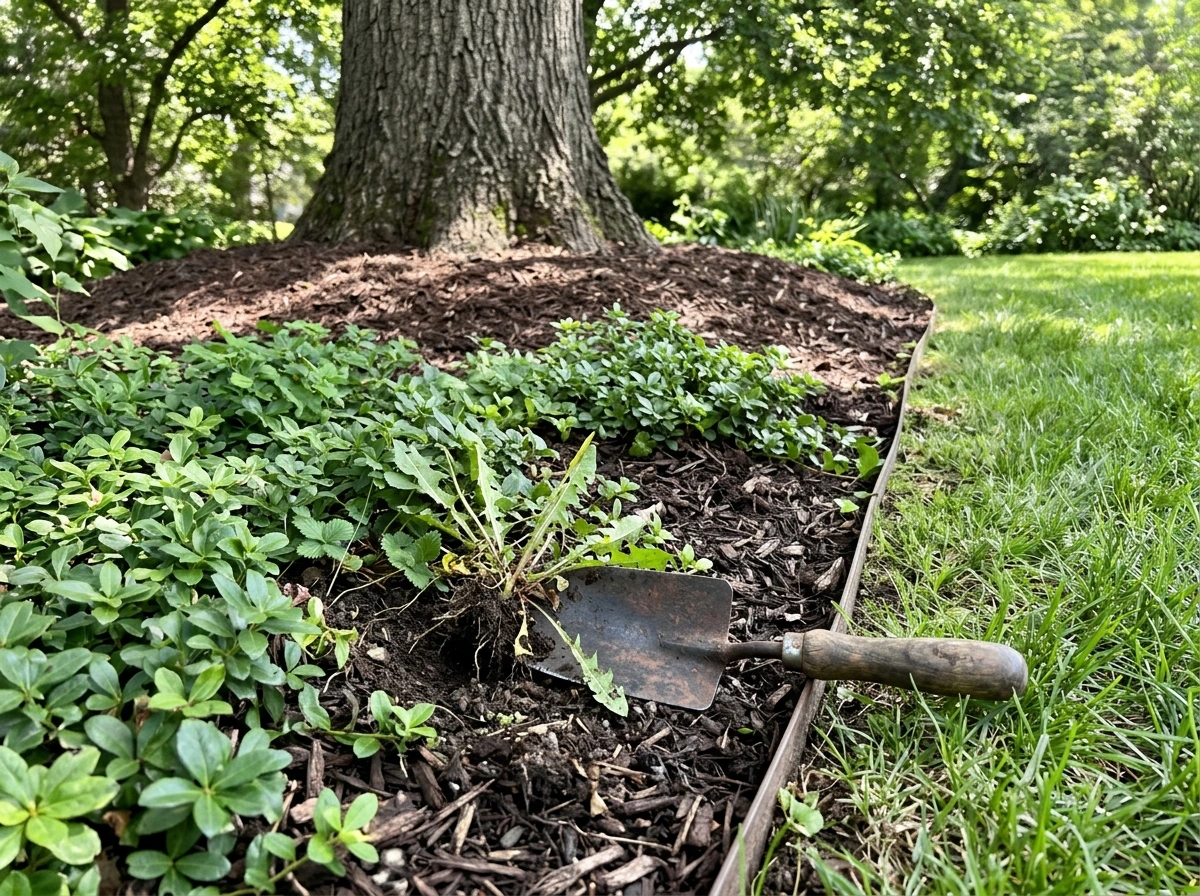
In a mulch or groundcover bed under a tree, hand weeding or careful spot-treatment is the way to go. Avoid using string trimmers close to the tree trunk since they damage bark and can create entry points for disease and pests. If you have turf trying to creep into a mulch bed, install a clean physical edge, a plastic or metal edging strip buried a few inches deep, to hold the boundary without constant maintenance. In groundcover beds, a well-established planting like pachysandra or vinca will eventually outcompete most weeds on its own once it fills in.
Mowing rules if you kept any turf in the area
If you do have a patch of shade-tolerant turf, mow it higher than you would a sun lawn. In shade, grass grows more slowly and each blade is doing less photosynthesis, so cutting it short removes too much of its working leaf area. Keep the mowing height at 3.5 to 4 inches in shaded zones. Also avoid mowing when the turf is wet, since the soil under trees is often softer and mower tires can compact the root zone. That compaction shows up over time as the turf zone deteriorates even faster.
Refresh mulch annually
Organic mulch breaks down over time, which is actually good for soil health, but it means the layer thins out and loses its weed-suppressing effectiveness. Plan to top-dress your mulch bed once a year in spring, bringing the depth back up to 2 to 4 inches. Check that mulch hasn't crept back against the trunk over winter from rain or foot traffic. Pull it back if it has, expose the root flare, and re-establish that clear gap around the base.
When to stop fighting the site and get professional help
There are a few situations where the DIY approach genuinely isn't going to work, and recognizing them early saves a lot of money and frustration.
Severe surface root conflicts
If the surface roots are so dense and elevated that you literally can't install plants or spread mulch evenly, you have a structural conflict that no groundcover can solve. In this situation, the right call is to call a certified arborist before you do anything else. They can assess whether roots need to be managed, whether the tree's health is at risk, and what grade or soil changes, if any, are safe to make. Cutting or burying major surface roots on your own to make room for landscaping can have serious consequences for tree stability and health.
Drainage failures
If water pools under the tree for more than 24 hours after a rain, you have a drainage problem that's separate from the tree issue. No groundcover or mulch solution will hold up in a zone that's periodically waterlogged. You'll need to address the drainage first, either through French drains, grading corrections, or raised bed installations, before any planting will succeed. This is usually a job for a landscaper with grading equipment.
Grade change projects
If you're thinking about bringing in topsoil or fill to level out the area under a tree, please talk to an arborist first. Adding even a few inches of soil over an established tree's root zone can suffocate feeder roots and cause gradual decline that may not show up for years. The critical root zone of a mature tree is far larger than most people expect, often extending well beyond the drip line, and it's genuinely easy to damage it without realizing what you've done.
The honest bottom line on grass under trees
The most reliable guidance I can give you is this: if you've tried twice and the grass keeps failing in the same spot, stop trying to grow grass there. It's not a product problem or a watering problem. The site is telling you what it wants. A clean mulch bed, a planting of pachysandra or vinca, or a mix of shade-tolerant native plants will look better, require less work, and cause no damage to the tree. That's a win all around. Save the lawn for the parts of your yard where it actually wants to grow, and consider lawn substitutes like groundcovers or mulch beds where landscaping ideas where grass won't grow. Save the lawn for the parts of your yard where it actually wants to grow, and consider lawn substitutes like groundcovers or mulch beds where landscaping ideas where grass won't grow. These landscaping ideas where grass won't grow can help you choose plants and bed setups that thrive under trees.
FAQ
Can I fix dead grass under trees by overseeding or using a shade seed mix?
Yes, but only if you treat it as an under-tree mulch bed, not a lawn. Seed mixes need consistent light and stable, oxygenated soil, and the tree root competition zone usually fails those requirements. If you still want to try seed, use it only on the brightest edge of the canopy, lightly scratch the surface (no digging), keep mulch light, and expect results to be patchy unless you also improve light or reduce canopy density.
Will cutting back the tree or thinning the canopy actually help groundcover establish?
You can, but choose pruning carefully. Thin branches in the interior of the canopy rather than removing large proportions of the outer canopy, and avoid creating sudden heat or sunscald on the trunk. Also note that light gains vary by season, so ask a local arborist to estimate how much the canopy thinning will change ground-level sun during summer, when turf struggles most.
If my under-tree turf keeps dying, should I just fertilize more?
Avoid it. Fertilizer can make mulch or groundcovers temporarily greener, but it does not solve the core issues: low effective light, root competition, and often compacted, dry surface conditions. If you do amend at all, focus on improving soil structure (compost top-dressing) and only use targeted nutrients after a soil test, since some trees and leaf litter patterns skew pH.
Why does my mulch bed stay dry even after it rains?
You may be watering the bed and still losing plants. Under canopies, rain often does not reach the base, and tree roots can suck up water before it moves deeper. Use a soil probe or screwdriver to check moisture 6 to 8 inches down, then water deeply enough to reach that depth before watering again. If the bed stays dry while the turf elsewhere looks fine, increase irrigation frequency slightly but keep it deep, not constant.
When is the best time to install groundcovers or mulch under trees?
For mature trees, the timing matters less than consistency once the bed is established, but you should avoid stressful periods. Install mulch and groundcovers when temperatures are moderate, then water during the first growing season to help roots grab hold before summer heat. If you’re adding compost top-dressings, do it early enough that it can settle and break down before winter, without piling against the trunk.
How far should mulch or plantings be from the tree trunk?
Distance from the trunk matters more than people think. Keep mulch at least 2 to 4 inches away from the trunk flare, and if the flare is hard to see, clean away only loose debris so you can locate it. For groundcovers, plant up to the gap but do not mound mulch to create a “volcano” border, because that holds moisture against the collar and can lead to rot.
Is it safe to use herbicides under mature trees to clear weeds before planting?
If you must remove weeds, do it manually and very selectively. Herbicides often drift with wind and can be taken up by tree root systems, especially when roots are dense at the surface. Spot-treating an entire bed under a mature tree is also risky if you do not know your tree tolerance and product behavior. Hand weeding and targeted spot control after mulch top-dressings are typically safer.
How do I prevent mowing traffic and turf spillover into a mulch or groundcover bed under a tree?
Yes, but the goal is to limit mower contact with the under-tree zone. A clean physical edge is the best long-term solution, and you should set mower height higher for any turf that remains near the border (around 3.5 to 4 inches). Also keep wheels and traffic off the root flare and surface roots, since compaction is one of the fastest ways to worsen turf decline.
How often should I top-dress mulch under trees, and what if it keeps creeping toward the trunk?
Because of root growth and organic matter settling, mulch depth can change faster than you expect in under-tree beds. Plan on checking the depth at least twice a year, after heavy rain and after peak foot traffic seasons, then top-dress in spring to restore 2 to 4 inches. If you see mulch creeping against the trunk, pull it back immediately to re-expose the root flare.
What should I do if water stands under the tree after rain?
In drainage problem areas, raised beds are often safer than amending the top. If water pools over 24 hours, start with grading or drainage solutions, such as a French drain or localized regrading, before you add any groundcover. Installing plants first can trap water in the wrong place, increasing root stress and making the final landscape harder to fix.
What if I cannot dig because there are lots of surface roots right away?
If you hit dense surface roots immediately when you try to dig, the correct move is usually to stop planting “into” that zone and instead use plugs placed between roots or rely on mulch/groundcovers that tolerate root density. Do not cut or bury major surface roots without professional guidance, because stability and feeder root access may be affected. An arborist evaluation is the safest next step when root density prevents even shallow bed preparation.
I get some sun under my tree, but not much. How do I decide between turf and groundcovers?
A good rule is to match your approach to your sunlight reality, not just what the tree canopy looks like. If you have under 2 hours of direct sun, choose mulch and shade-tolerant groundcovers, and avoid expecting turf to fill in. If you have 2 to 4 hours, fine fescues may survive but will likely require higher maintenance, so consider whether a groundcover will better match your time and tolerance for mowing and patch repair.
Next Articles
Best Ground Cover for Areas Where Grass Won’t Grow
Pick the best ground cover for tough spots where grass fails, with prep tips, spacing, and fast, low-maintenance options
Landscaping Ideas Where Grass Won’t Grow: Fix Any Spot
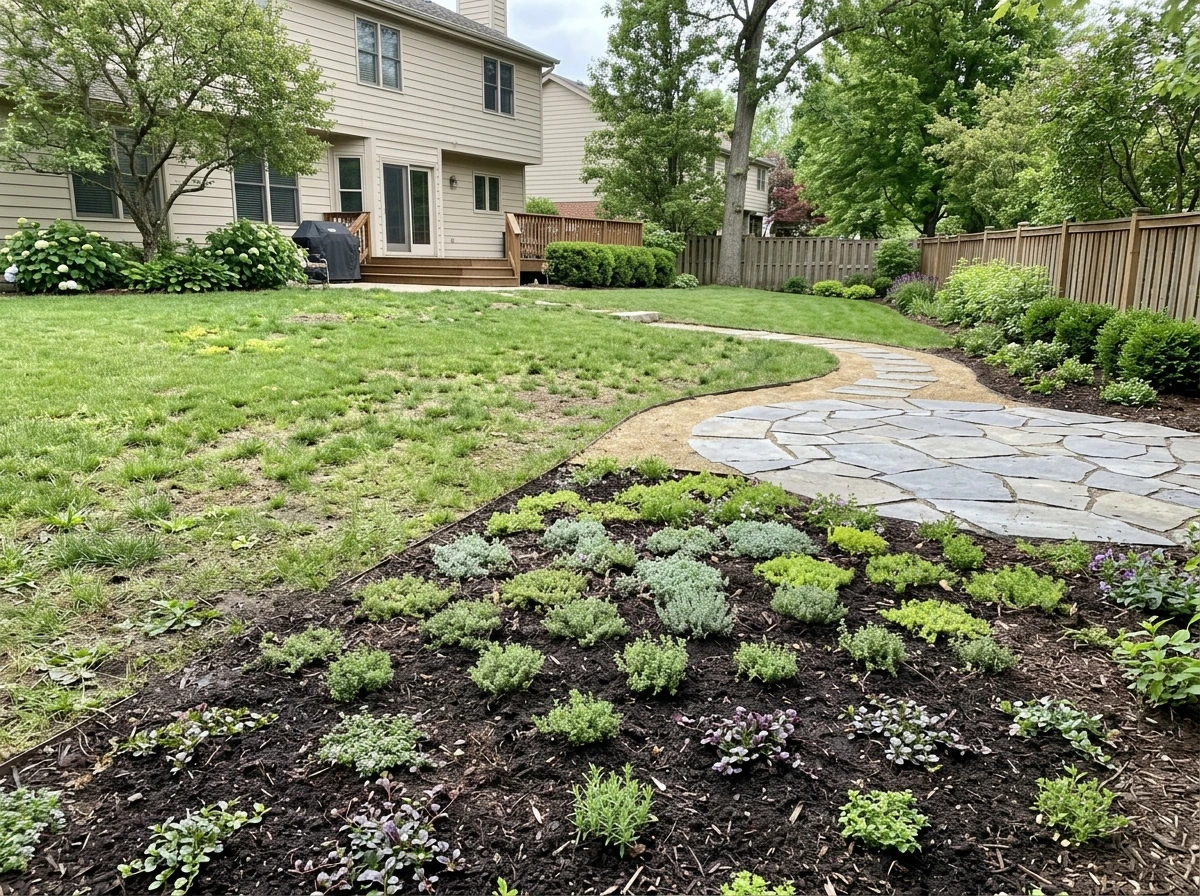
Diagnose why grass fails and install weedproof hardscape or groundcovers with soil prep, timing, and spot-by-spot plans.
Can You Grow Grass Over Gravel? How to Do It Right
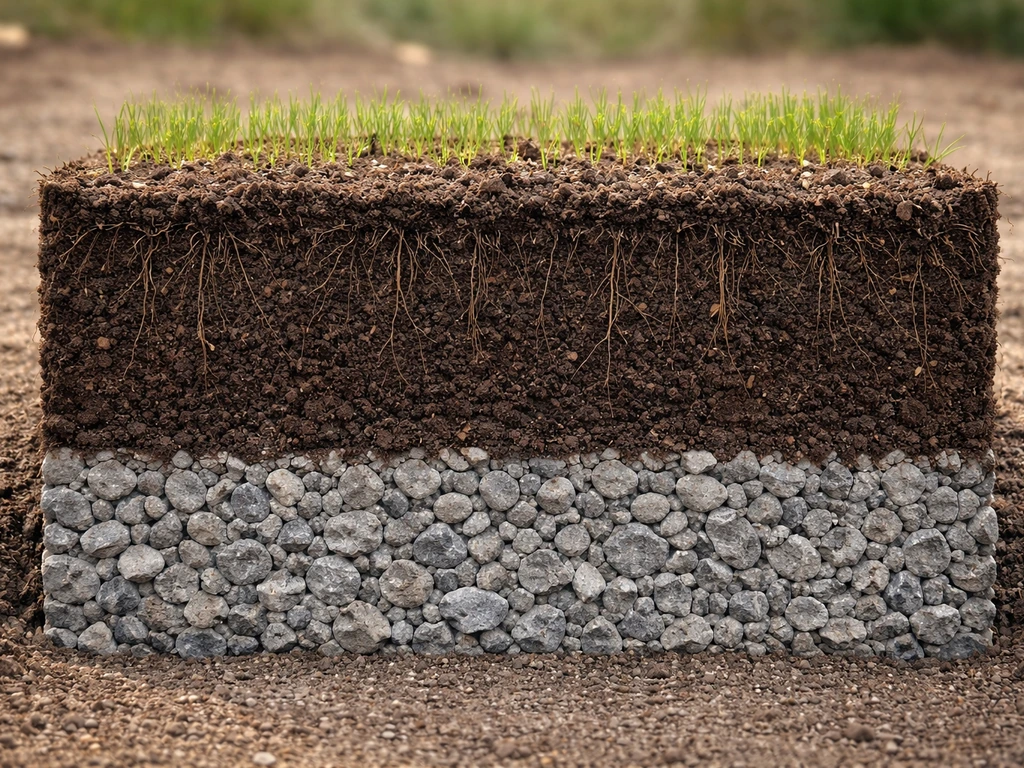
Learn when you can grow grass over gravel and follow a step-by-step method for soil depth, drainage, seeding or sod, and