
If grass keeps dying in a certain spot, the honest answer is: stop fighting it. Some patches just aren't made for lawn grass, and the sooner you switch to a ground cover that actually fits those conditions, the sooner you get something that looks intentional instead of patchy. If you want more landscaping ideas for these grassless zones, browse the landscape ideas where grass won't grow guide for inspiration. This guide walks you through diagnosing exactly why grass fails in your spot, choosing the right plant for those conditions, and getting it in the ground with a real plan for coverage and maintenance. what to plant where grass won't grow
Best Ground Cover for Areas Where Grass Won’t Grow
Marcus Volkmann
24 Mar 2026
Why Grass Won't Grow There
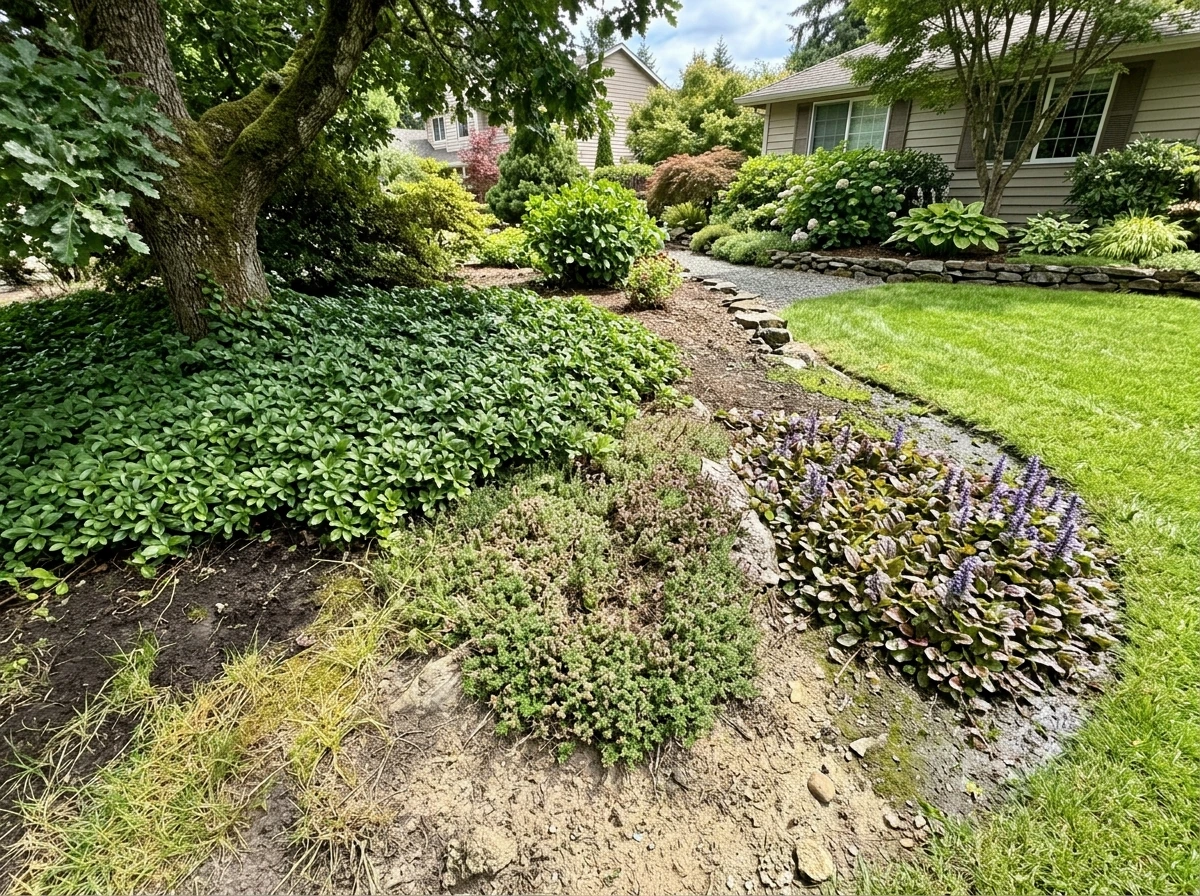
Grass failure almost always comes down to one (or more) of a handful of stressors. If you are wondering where to start, these landscaping ideas where grass won't grow options can help you switch from turf failure to plants that match your conditions. UMass Extension categorizes them as abiotic limiting factors, which is a fancy way of saying the physical environment is working against you. The most common culprits are shade, tree root competition, poor drainage, compacted soil, drought, infertile or acidic soil, and heavy foot traffic. On top of those physical problems, you've also got biotic stressors like weeds, insects, and disease that pile on once grass is already weakened.
Soil pH is a surprisingly common hidden factor. Most turfgrasses want a pH between 6.0 and 7.5, with Kentucky bluegrass specifically preferring 6.5 to 7.2. If your soil is more acidic or alkaline than that, grass can't absorb nutrients properly and just slowly starves even if you're feeding it. Compaction is another sneaky one: when soil is packed hard, water can't infiltrate, roots can't penetrate, and nothing establishes well. The ideal lawn root zone, as UMass Extension describes it, is friable and fertile with good infiltration, drainage, and water-holding capacity. If your problem spot has none of those qualities, grass was always going to struggle.
The most important mindset shift: the goal isn't to fix the spot for grass. The goal is to find a plant that actually likes those conditions. That's where ground covers come in.
Quick Site Assessment Before You Buy Anything
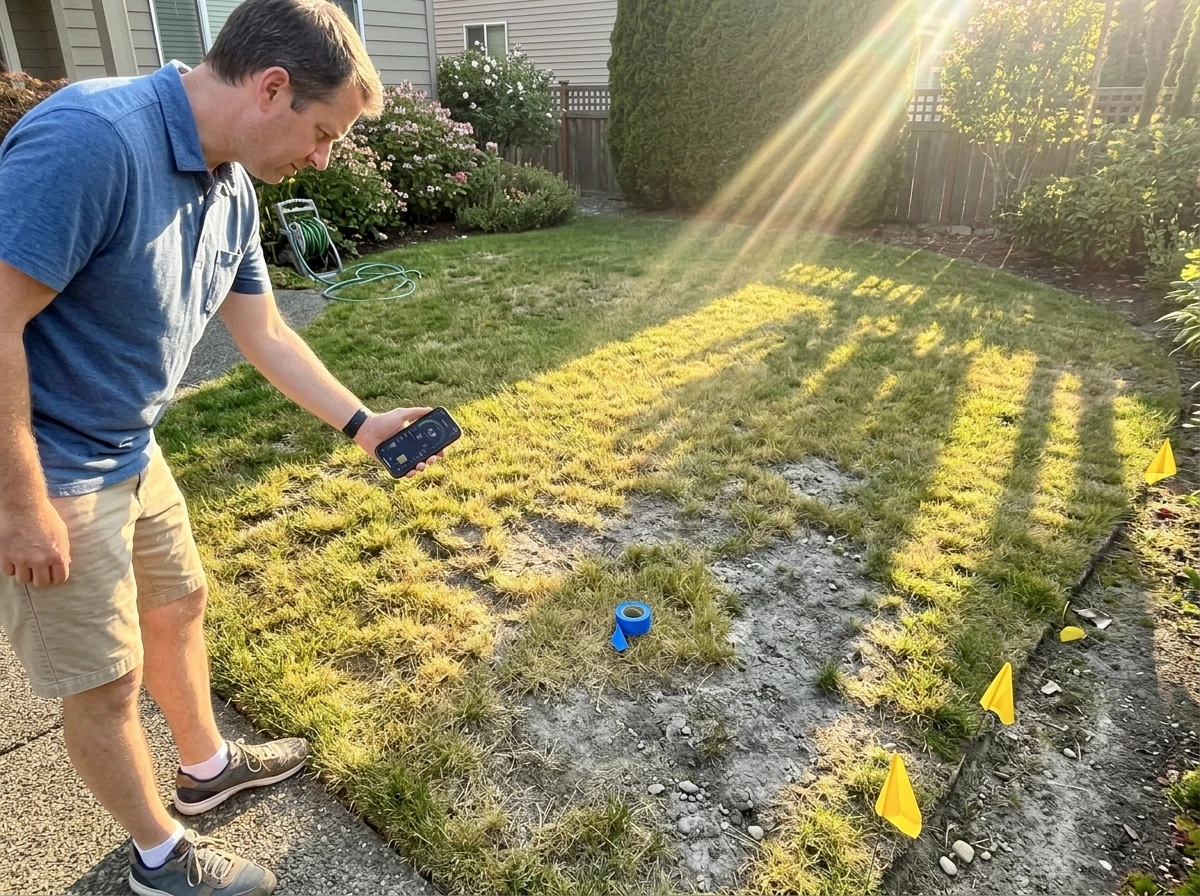
Spend 15 minutes on this before you order plants. It saves you from buying something that will die in the same spot grass died in.
Light
Stand in the problem area at different times of day and honestly count the hours of direct sun. Full sun is 6 or more hours. Part shade is 3 to 6 hours. Full shade is less than 3 hours of direct sun. Under a dense tree canopy, you might be dealing with nearly zero direct sun at ground level, which eliminates most standard turfgrasses entirely. If you're dealing with a shady area under trees, you'll want to check out landscaping under trees where grass won't grow for more specific tree-root strategies alongside this guide.
Moisture and Drainage
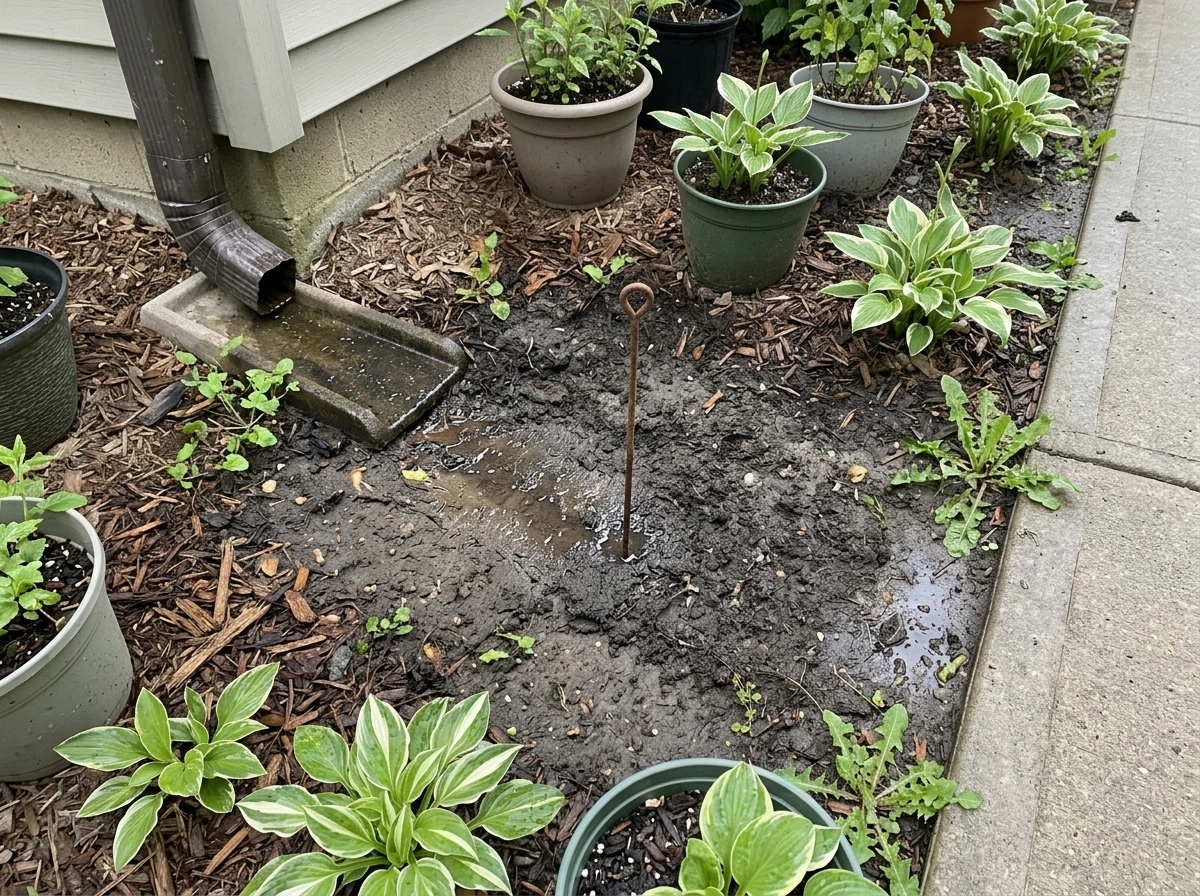
After a normal rain, check whether the spot stays soggy for more than 24 hours. If it does, drainage is your main constraint. On the flip side, if you're dealing with sandy soil, a slope, or a spot near a south-facing wall, you may have the opposite problem: soil that dries out within hours. Poke a screwdriver or pencil into the soil. If you can't push it in more than an inch without force, compaction is likely a major factor.
Soil Quality
A basic soil test (available at most extension offices for $15 to $25) will tell you pH and nutrient levels. This matters even for ground covers because a pH that's severely off will slow establishment of almost anything. If the area has heavy clay, shallow fill, or obvious compaction, note that too. You'll need to decide whether you're going to amend the soil or pick a plant that tolerates poor soil as-is.
Foot Traffic
Most ornamental ground covers cannot handle regular foot traffic. If people or pets cut through that area daily, you're better off installing stepping stones through a ground cover bed, or choosing one of the few tough-enough options like creeping thyme. Be honest about traffic patterns or your new plants will get stomped out.
Ground Cover Options by Condition
Here's how to match plants to your specific problem site. These aren't exhaustive lists, but they're the most reliable performers I've seen work consistently in real-world conditions.
Heavy Shade and Tree Root Competition
This is the most common reason grass fails. Tree roots outcompete grass for water and nutrients, and the canopy blocks the light grass needs. UMass Extension notes that tree canopy blocks light for turf and that tree surface roots compete with turf for nutrients and water, contributing to poor turf performance under trees Tree roots outcompete grass for water and nutrients, and the canopy blocks the light grass needs.. Virginia Cooperative Extension specifically recommends choosing shallow-rooted plants for under-tree planting, because they can coexist with tree roots without battling for the same deep soil resources.
- Pachysandra terminalis: one of the best performers under dense deciduous or evergreen trees. Spreads steadily, stays evergreen in most zones (4–9), tolerates deep shade. Space 6–8 inches on center for good coverage within two to three seasons.
- Liriope muscari (big blue lilyturf): clumping habit, extremely adaptable, handles shade and some drought once established. LSU AgCenter lists this as a reliable shade option, and it's a solid choice across zones 5–10.
- Mondo grass / Ophiopogon japonicus: low, grass-like, excellent for dense shade. Slower to fill in than liriope but very low maintenance once established. Good for zones 6–10.
- Creeping lily turf (Liriope spicata): spreads more aggressively than muscari, which can be an asset when you need to cover ground faster. Contain it with edging.
- Vinca minor (periwinkle): fast spreader, tolerates shade and some drought, produces small blue-purple flowers. Can become aggressive, so use edging. Zones 4–9.
- Japanese ardisia (Ardisia japonica): works well in part to full shade in warmer climates (zones 7–9), slow-growing but forms a dense mat.
Dry, Sandy, or Drought-Prone Sites
Sandy soil drains fast and holds almost no moisture, which kills grass through chronic drought stress. The right ground covers for these sites need genuine drought tolerance, not just the marketing claim.
- Creeping thyme (Thymus serpyllum): tough, fragrant, handles drought, poor soil, and light foot traffic. Stays under 3 inches tall. Zones 4–9.
- Sedum (stonecrop varieties): succulent foliage holds water internally, thrives in sandy or rocky soil with minimal irrigation. Many varieties are hardy to zone 3 or 4.
- Lantana (spreading varieties): outstanding drought tolerance once established, produces flowers through summer. Best in zones 8–11, grown as annual farther north.
- Ice plant (Delosperma): extremely drought-hardy, spreads well on slopes, zones 5–9 depending on variety.
- Native prairie or meadow plants: buffalo grass, blue grama, or native sedges can work in transitional areas where you want something lower-input than a maintained lawn.
Poor, Compacted, or Infertile Soil
If the soil is heavily compacted, has low organic matter, or was stripped of topsoil during construction, grass won't establish reliably because the root zone is basically dead. Rather than spending a lot of money amending poor soil across a large area, pick plants that can handle it.
- Crown vetch (Coronilla varia): very aggressive spreader that tolerates poor, compacted, and even eroded soil. Good for slopes. Use with caution because it spreads widely.
- Daylilies (Hemerocallis): incredibly tough, spread through clumps, tolerate poor soil and light drought. Easy to divide and expand coverage.
- Black-eyed Susans and native coneflowers: not traditional ground covers but work as a naturalized planting in rough areas where nothing else establishes.
- Creeping juniper (Juniperus horizontalis): low-growing, evergreen, handles poor soil, slopes, and cold winters (zones 3–9). Slow to fill in but very durable long-term.
- Asian jasmine (Trachelospermum asiaticum): vigorous spreader for zones 7–10, handles poor soil and part shade well.
Wet, Poorly Drained Areas
Few ground covers like sitting in standing water, but some tolerate soggy conditions that would rot out grass.
- Ajuga reptans (bugleweed): spreads quickly, handles moisture and part shade, good for wetter spots at the edge of trees or low areas. Zones 3–9.
- Creeping Jenny (Lysimachia nummularia): bright chartreuse foliage, loves moisture, spreads fast. Can be used near water features or low wet spots. Zones 3–9.
- Native sedges (Carex species): grass-like foliage, many species tolerate wet or dry shade, low maintenance once established. Excellent for naturalizing difficult areas.
Comparing Your Best Options
If you're narrowing down a shortlist, this comparison covers the most commonly needed traits. The recommendation after the table gives you a starting point based on the most common problem scenarios.
| Plant | Shade Tolerance | Drought Tolerance | Spread Speed | Foot Traffic | Erosion Control | Hardiness Zones |
|---|---|---|---|---|---|---|
| Pachysandra | Excellent | Low (needs moisture) | Moderate | Poor | Good | 4–9 |
| Liriope muscari | Good | Good | Moderate (clumping) | Low | Moderate | 5–10 |
| Vinca minor | Good | Moderate | Fast | Poor | Good | 4–9 |
| Creeping thyme | Low (needs sun) | Excellent | Moderate | Light traffic OK | Moderate | 4–9 |
| Sedum (stonecrop) | Low (needs sun) | Excellent | Slow–Moderate | Poor | Good on slopes | 3–9 |
| Ajuga reptans | Good | Low (needs moisture) | Fast | Poor | Moderate | 3–9 |
| Creeping juniper | Low–Moderate | Good | Slow | Poor | Excellent | 3–9 |
| Mondo grass | Excellent | Moderate | Slow | Poor | Moderate | 6–10 |
| Creeping Jenny | Moderate | Poor (needs moisture) | Fast | Poor | Moderate (wet areas) | 3–9 |
| Native sedges | Excellent | Varies by species | Moderate | Low | Good | 3–9 |
For most shady, tree-dominated areas: start with pachysandra or liriope. They're proven, widely available, and forgiving once established. For sunny dry spots: creeping thyme or sedum are your most reliable bets with the least maintenance. For large rough areas with poor soil where budget matters: vinca minor or ajuga spread fast and cost less per square foot to establish. For slopes where erosion is the main concern: creeping juniper for cold climates, Asian jasmine for warm climates, or crown vetch if you just need coverage and aren't worried about containment.
Soil Prep and Getting the Site Ready
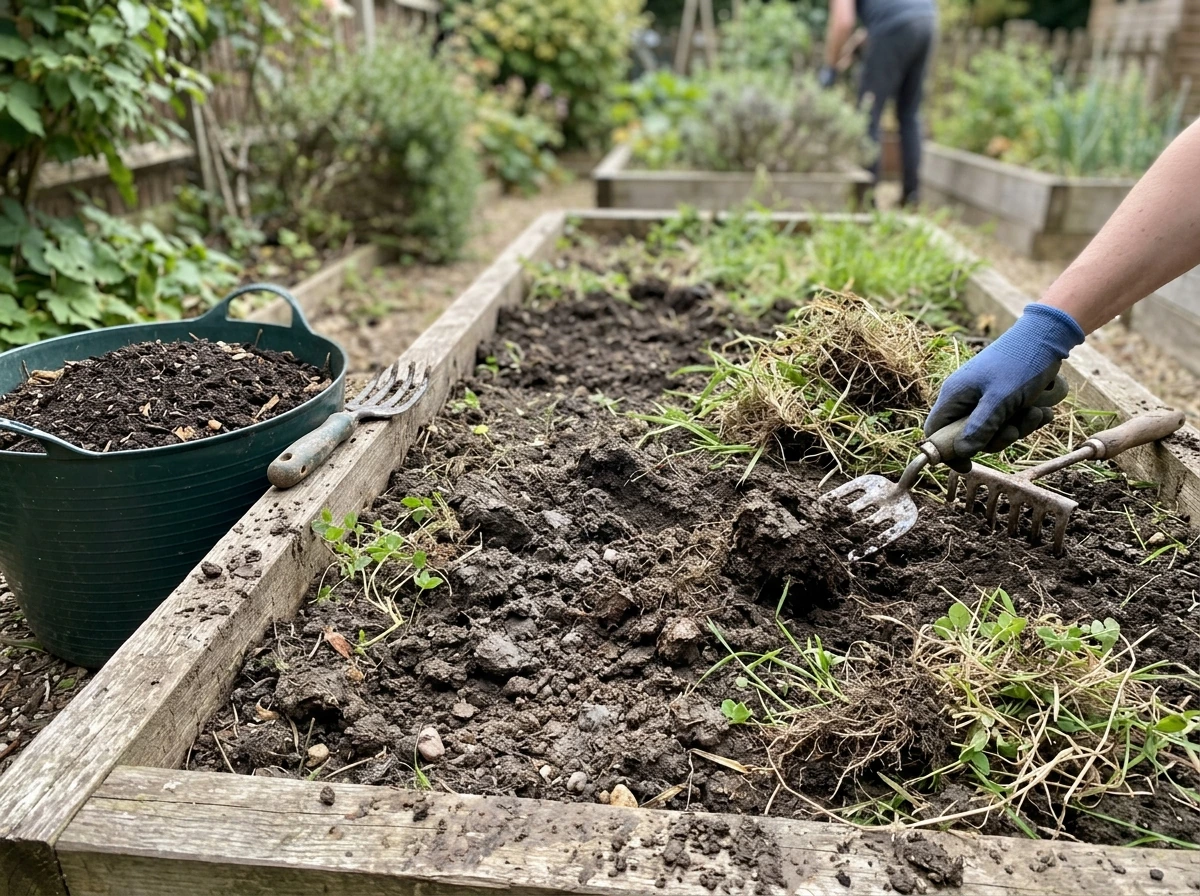
How much soil prep you do depends on what you're planting and what condition the soil is in. For tough plants going into a low-input situation (like creeping juniper on a slope with poor soil), you don't need to do much beyond clearing weeds and loosening the top few inches. For plants that need decent drainage and some fertility (like pachysandra or liriope), a little more prep pays off.
Step-by-Step Site Prep
- Clear the area completely. Remove existing weeds, dead grass, and debris. For persistent weeds, use a non-selective herbicide and wait 7–14 days before planting, or smother with cardboard and 3–4 inches of mulch for a few weeks.
- Test your soil pH if you haven't already. If it's below 5.5 or above 8.0, amending with lime (to raise pH) or sulfur (to lower pH) will improve establishment. Most ground covers tolerate a wider pH range than lawn grass, but extreme values slow everything down.
- Loosen compacted soil. For small areas, use a garden fork or broadfork to break up the top 4–6 inches. For larger areas, a tiller helps, though under trees you should avoid deep tillage that damages roots. A light surface loosening is enough under established trees.
- Add organic matter if the soil is very poor. A 1–2 inch layer of compost worked into the top few inches makes a meaningful difference for establishment, especially in clay or sandy soils.
- Install edging before planting, not after. Plastic or metal edging along beds, sidewalks, and lawn borders is much easier to set before plants are in the ground, and it's essential for containing spreaders like vinca, ajuga, and liriope spicata.
- Apply a pre-emergent weed preventer or lay weed fabric (with caution). Weed fabric works reasonably well under mulch but can interfere with natural spreading of plants you actually want to colonize the space. Pre-emergent herbicide applied after planting is often a better choice.
How to Install Ground Covers: Methods, Spacing, and Coverage
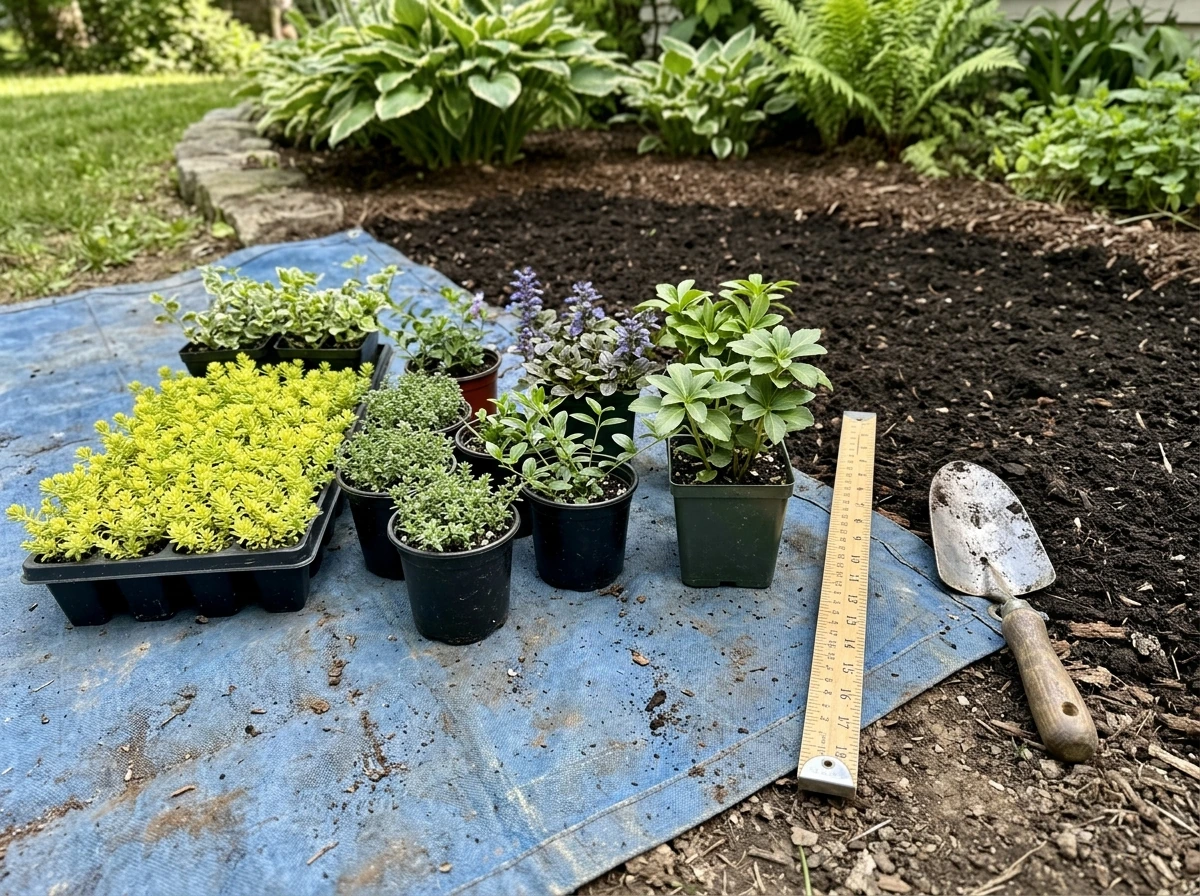
Ground covers can be installed from plugs, pots, divisions, or seed depending on the species. Most of the reliable performers listed above are sold as potted plugs or small containers, which is the most practical approach for most homeowners.
Plugs vs. Containers vs. Seed
- Plugs (small cells or 2–4 inch pots): lowest cost per plant, good for large areas. Establish well if watered consistently after planting.
- 4-inch to quart containers: faster establishment than plugs, a bit more expensive. Good balance for medium-sized areas.
- Gallon containers: most expensive per plant but gives you the fastest visible coverage and the best start in difficult sites.
- Seed: only practical for a handful of ground covers (creeping thyme, some sedges, clover). Slower and requires more weed competition management, but very low cost for large areas.
Spacing and Coverage
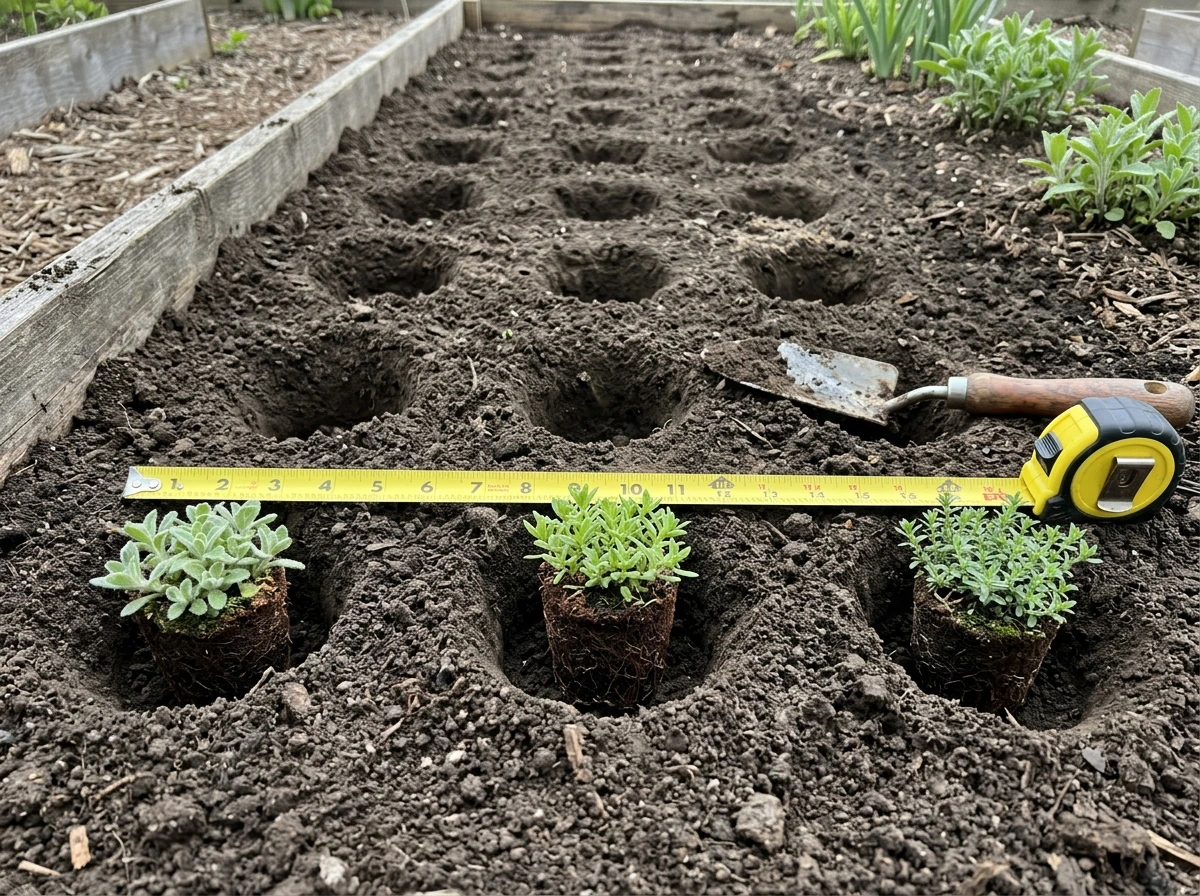
Spacing determines how fast you get full coverage and how much you spend upfront. The tighter the spacing, the faster the coverage but the more plants you need. Virginia Cooperative Extension gives a useful benchmark: plants spaced 4 inches apart cover about 11 square feet per 100 plants. That's a dense planting. For most ground covers, 6–12 inch spacing is the practical range.
| Plant | Recommended Spacing | Coverage per 100 Plants (approx) | Full Coverage Time |
|---|---|---|---|
| Pachysandra | 6–8 inches on center | 25–44 sq ft | 2–3 seasons |
| Vinca minor | 8–12 inches on center | 44–100 sq ft | 1–2 seasons |
| Liriope muscari | 12–18 inches on center | 100–225 sq ft | 2–3 seasons |
| Ajuga reptans | 6–12 inches on center | 25–100 sq ft | 1–2 seasons |
| Creeping thyme | 6–12 inches on center | 25–100 sq ft | 1–2 seasons |
| Creeping juniper | 3–5 feet on center | 1,000+ sq ft (mature) | 3–5 seasons |
| Sedum (groundcover types) | 12–18 inches on center | 100–225 sq ft | 2–3 seasons |
To calculate how many plants you need: measure your area in square feet, then divide by the spacing factor for your chosen plant. High Country Gardens recommends basing your spacing on the mature spread of the plant, which you can find on the plant tag or in the species description. For a 100 square foot area planted with liriope at 18 inch spacing, you'd need roughly 45 plants. Buying a few extra (10 to 15 percent) gives you fill-in plants if some don't establish.
Planting Day
- Water plants thoroughly before removing them from containers.
- Dig holes at your planned spacing, at the same depth as the root ball (no deeper).
- Set each plant, backfill, and firm the soil gently around the base.
- Apply 2–3 inches of mulch (shredded bark, pine straw, or leaf mulch) between plants. Keep mulch an inch away from plant stems. Mulch suppresses weeds and holds moisture during the critical establishment window.
- Water the entire area deeply immediately after planting.
Watering, Maintenance, and Keeping Things in Bounds
The first season is the most critical. Most ground cover failures happen because plants don't get enough water to establish roots before hitting a dry stretch. UMass Extension's establishment guidance for lawns recommends keeping the root zone consistently moist, sometimes watering 2–3 times a day in hot weather during establishment. The same logic applies to ground cover plugs. Small plants have small root systems and can't buffer against drought until they've had one full growing season to spread roots.
First-Season Watering
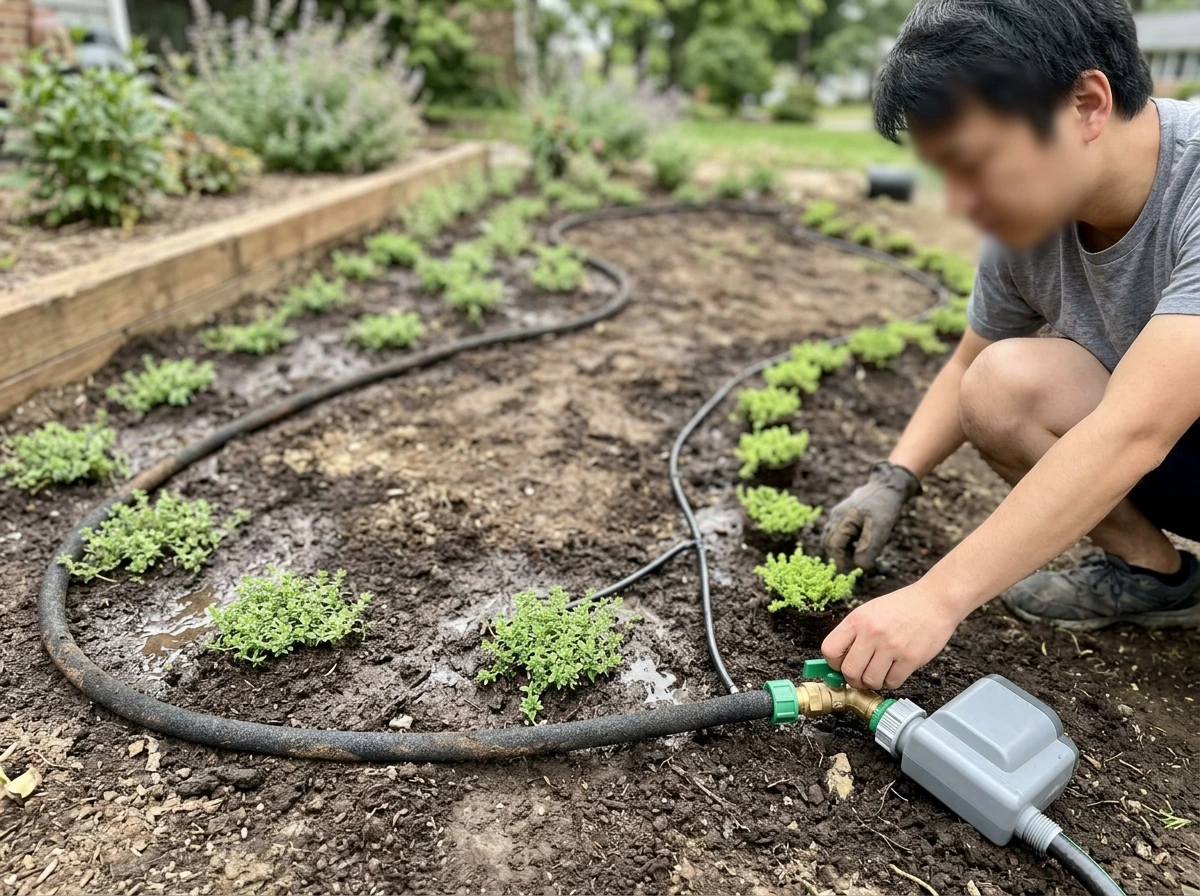
Water new plantings every 1–2 days for the first 4–6 weeks, then taper to once or twice a week for the rest of the first season. Drip irrigation or soaker hose works better than overhead watering for ground covers because it delivers moisture directly to roots without wetting foliage. After the first full growing season, most established ground covers need little supplemental water except in extreme drought.
Weeding During Establishment
The window between when you plant and when your ground cover closes the canopy is when weeds are most likely to move in. Hand-pull weeds rather than using a hoe, which can damage shallow roots. Top up your mulch layer at the start of year two to smother weed seeds. Once your ground cover fills in and the canopy closes, most weeds can't compete effectively.
Containment and Edging
Spreading ground covers are working as designed, which means they'll eventually try to go where you don't want them. LSU AgCenter notes that vining or spreading types like Asian jasmine and English ivy may need periodic edging and trimming to keep them neat. Check borders two or three times a year and cut back any runners that are crossing into lawn, garden beds, or paved areas.
A flat spade or a string trimmer run along the edge works well for this. For aggressive spreaders like vinca or ajuga, a physical edging barrier sunk 4–6 inches into the soil is worth the upfront effort. If you're looking for broader landscape design ideas around these problem areas, check out the landscaping ideas where grass won't grow article on this site for inspiration on integrating ground covers into a cohesive yard plan.
Fertilizing
Most ground covers are low-input once established and don't need the regular feeding a lawn requires. A light application of balanced slow-release fertilizer in early spring (something like a 10-10-10 at half the recommended rate) is enough to support spring growth without pushing excessive floppy growth or weed pressure. Avoid high-nitrogen fertilizers, which favor weeds over most ornamental ground covers.
Seasonal Cleanup
For evergreen ground covers like pachysandra or liriope, a light shearing in early spring before new growth emerges keeps them looking tidy and removes any winter-damaged foliage. Use a string trimmer set high or a mower on the highest setting. For deciduous types or those that die back in winter, cut them back to the ground in late winter before new growth appears. That's really the full extent of annual maintenance for most established ground cover beds, which is the main reason they're worth the upfront investment in a spot where you've been fighting grass for years.
FAQ
Can I just replace dead grass with ground cover seed, or do I need plugs?
Yes, but only if you treat it like an establishment project, not a lawn replacement. For ground covers, you still need consistent moisture for 4–6 weeks (often 1 to 2 days), and you should expect bare soil to invite weeds until the canopy closes. If you sow seed, plan for longer weed control and slower closure than plug planting, and buy seed or plugs suited to your sun and drainage conditions.
Will ground covers eventually stay contained if I don’t install edging?
You usually can’t. Many aggressive ground covers will soften edges and creep under barriers, so you need a physical separation plan, not just a “low border.” Put in edging material (sunk a few inches) at the start, and expect periodic trimming along hardscape and lawn boundaries, especially with vining or spreading types.
When is the best time of year to plant ground cover in shady or dry areas?
Wait until the soil conditions match the plant’s needs. In hot, dry periods, planting plug ground covers is risky unless you can provide the frequent watering schedule for the first month. In heavy shade, planting during a dry spell can slow rooting too, because the soil may not dry evenly. A practical rule is to plant when you can keep the root zone consistently moist for the first 4–6 weeks.
What should I do if water sits after rain, but I still want a ground cover?
Don’t assume it’s “grass vs. no grass.” If the spot drains poorly, adding ground cover without addressing standing water can still fail. If the soil stays soggy beyond a day after rain, prioritize drainage solutions (raised beds, improved infiltration, or redirecting runoff) or choose a cover that tolerates wet conditions, otherwise you will repeat the same failure you had with turf.
Should I amend soil, or just pick a plant that tolerates bad soil?
A small soil amendment can help, but severe issues may require a decision. If pH is far off, fixing pH gradually is often more reliable than trying to “out-tolerate” it with plants. If compaction or construction fill is the real issue, limited spot prep (loosening, adding compost to the top layers) can help, but in large areas it may be more cost-effective to choose a tolerant species rather than amending soil across the whole patch.
Do drought-tolerant ground covers still need frequent watering at first?
Yes, and it’s one of the most common mistakes. Even if a ground cover is meant to be drought tolerant, plugs and small starts still need regular water until roots spread. If you cut watering too early during a heat wave, you can lose the initial stand and end up with gaps that take longer to fill.
Can ground cover work under mature trees without fighting the roots?
Sometimes, especially for plants that can handle shade and tree roots, but it must be planned. If you have deep, dense roots close to the surface, you may need shallow-rooting choices and a looser planting approach (top-dress compost, then keep the root zone moist initially). For aggressive spreaders, be extra careful in tree areas because trimming and containment can become constant.
What if people and pets still walk through the area where grass won’t grow?
Yes. If foot traffic is common, most creeping covers will thin, even if they look good initially. Use a strategy: keep the ground cover bed mostly off-limits, add stepping stones for paths, and reserve the toughest options (like creeping thyme) for truly low-to-moderate traffic zones.
How can I tell whether my ground cover failure is from drought, soil, or weeds?
Watch for the “early warning” patterns rather than waiting a full season. If new plugs look wilted but the surrounding soil stays dry, increase watering and improve delivery with drip or soaker. If leaves yellow while soil is damp, check pH and nutrients because slow starvation can happen even with adequate watering. If growth stalls and the area is consistently wet, switch strategy toward drainage tolerance.
How do I control weeds during the first year when my ground cover isn’t fully grown in yet?
Weeds usually win before the canopy closes, so the technique matters. Hand-pull first, but be consistent, and avoid disturbing shallow roots. In year one, light mulch can help, but do not bury young plugs too deeply. In year two, top up mulch to smother new weed seedlings once the plants start knitting together.
When should I give up on a ground cover and replant with a different species?
You should re-evaluate once you have clear evidence of failure, not just slower growth. If after one full growing season the patch is still mostly bare or you have widespread plug loss, the odds are you mismatched sun, drainage, or root competition. Before replanting, re-check direct sun hours, drainage after rain, and whether soil is compacted, then choose a plant aligned to the worst constraint you found.
How tight should I space ground covers to prevent weeds and get full coverage faster?
Yes, and spacing is the main lever. If you plant wider than recommended, it can look “fine” at first and then weeds take over while the canopy takes too long to close. Use mature spread on the tag for planning, and consider buying 10 to 15 percent extra for fill-in plants if establishment is unpredictable.
Next Articles
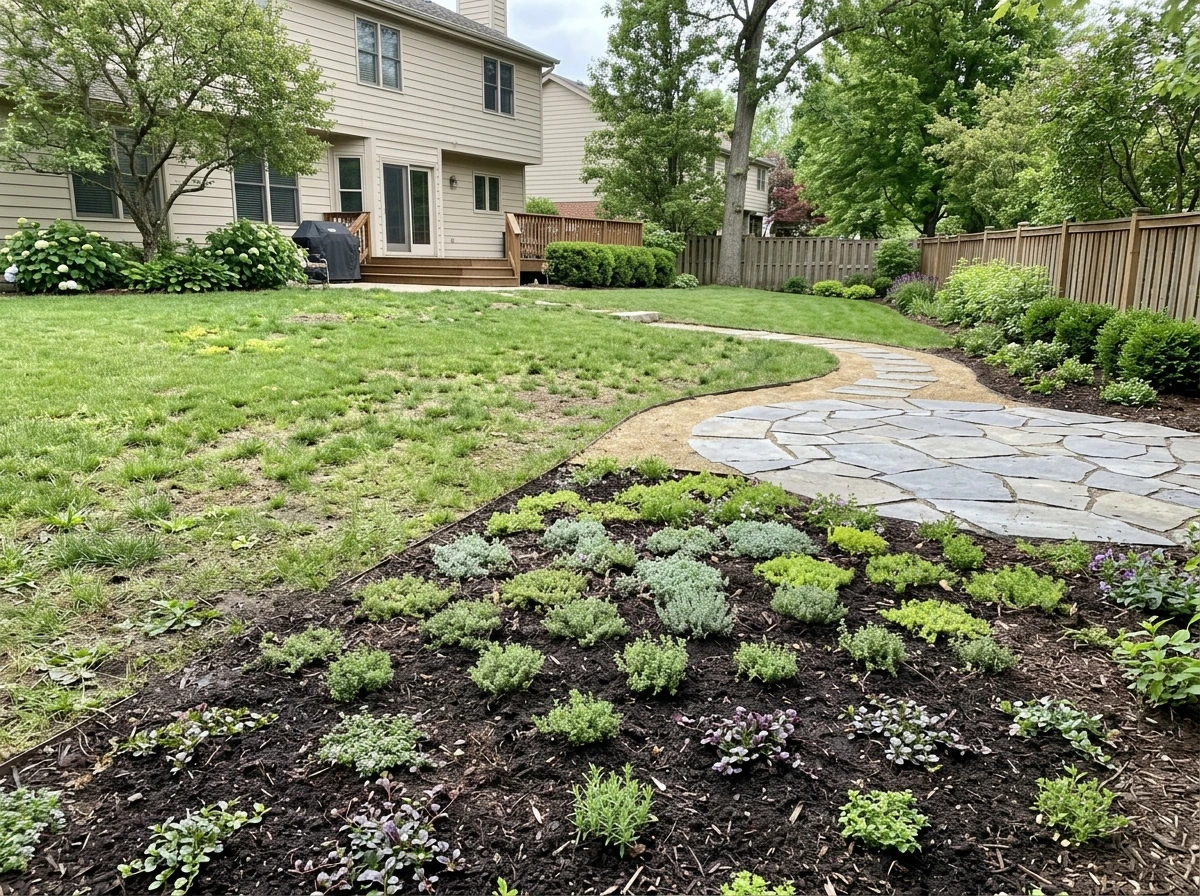
Landscaping Ideas Where Grass Won’t Grow: Fix Any Spot
Diagnose why grass fails and install weedproof hardscape or groundcovers with soil prep, timing, and spot-by-spot plans.
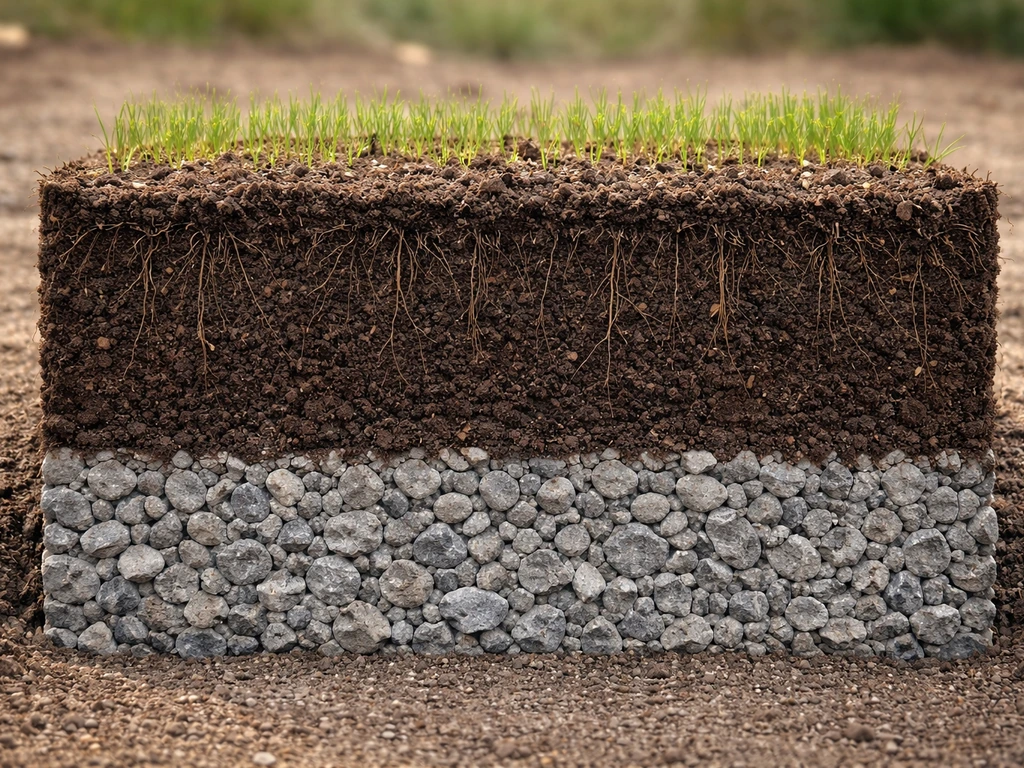
Can You Grow Grass Over Gravel? How to Do It Right
Learn when you can grow grass over gravel and follow a step-by-step method for soil depth, drainage, seeding or sod, and
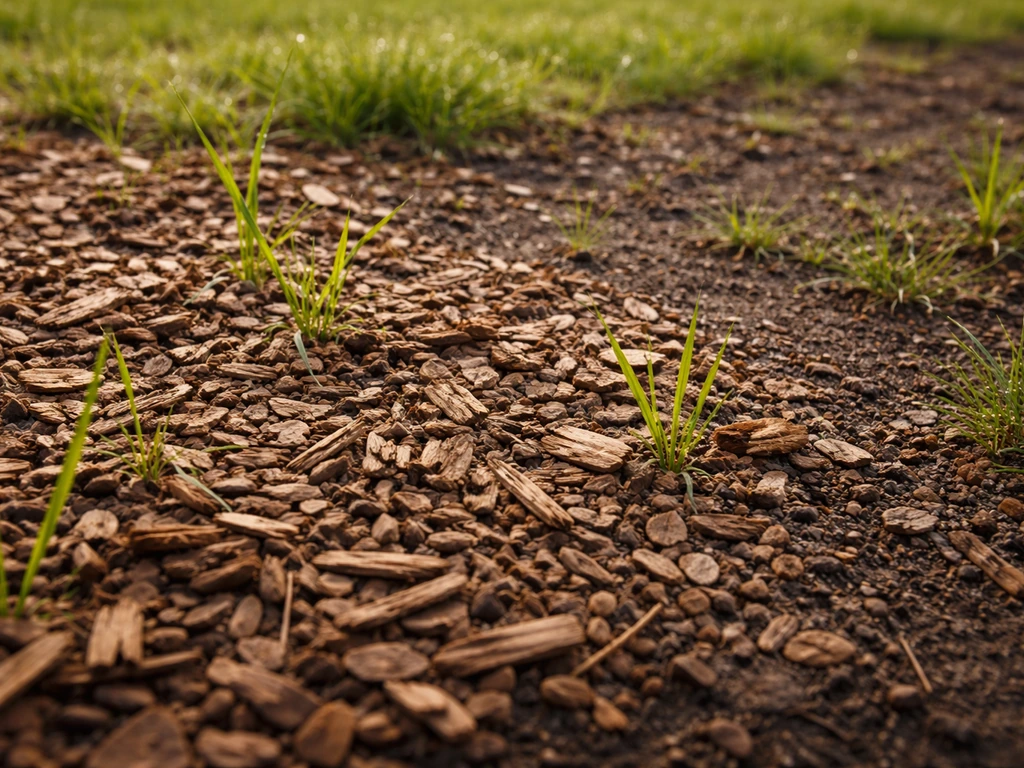
Do Wood Chips Help Grass Grow? When They Work and When Not
Learn when wood chips help grass grow, when they steal nitrogen, and step-by-step how much to apply and seed options.