
Grass blocks cannot naturally generate or spread in the Nether. You can physically carry a grass block into the Nether using Silk Touch, and it will sit there, but it will not spread to adjacent dirt blocks under normal Nether conditions. The mechanics that allow grass to spread just don't line up with the Nether's environment, and once that grass block is covered or starved of light, it turns to dirt permanently. That said, there are a few things worth trying if you want to test the limits, and there are solid workarounds if your real goal is a green-looking Nether build.
Can Grass Grow in the Nether? Real Rules and Steps
Marcus Volkmann
27 Apr 2026
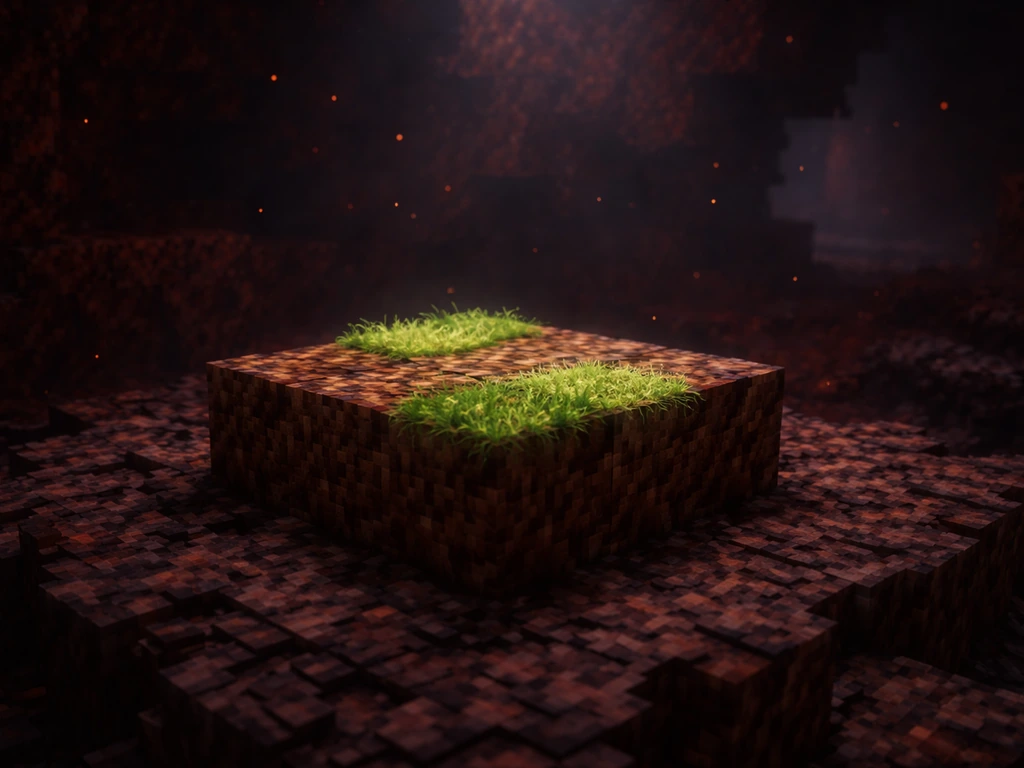
Why grass refuses to cooperate in the Nether
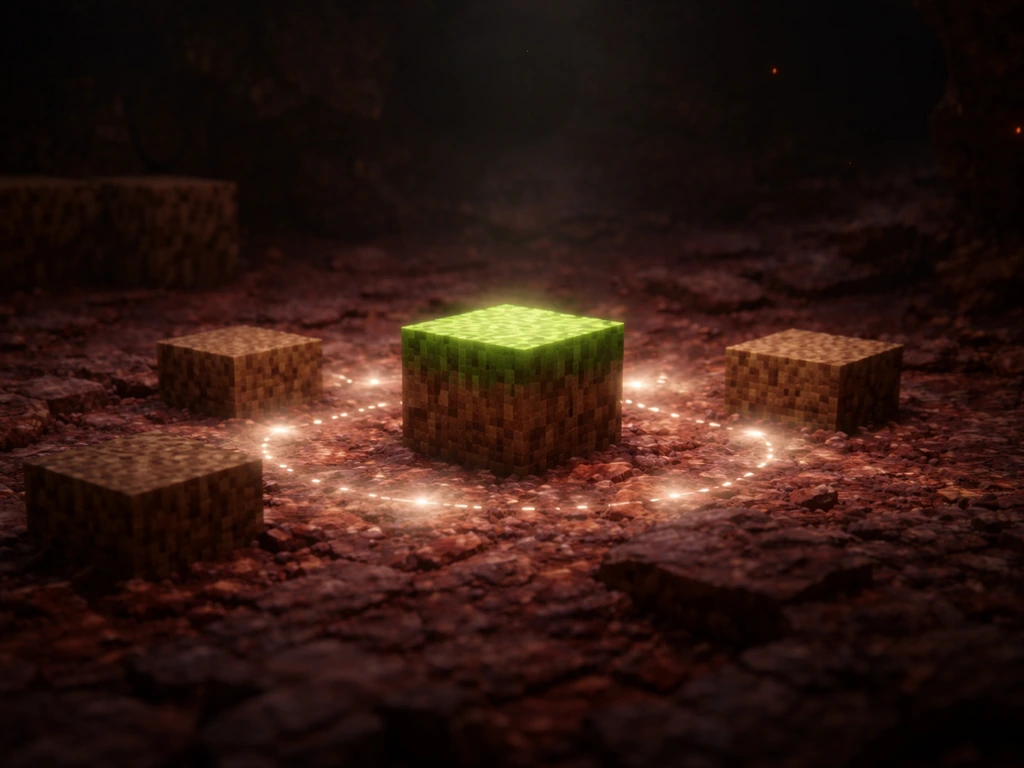
Grass spreading in Minecraft is driven by the random tick system. When a grass block gets a random tick, it looks at up to 4 nearby dirt blocks within a 3x5x3 area and tries to convert them. For that conversion to happen, a fairly specific set of conditions has to be met all at once, and the Nether makes most of those conditions nearly impossible to achieve naturally.
Here are the exact requirements that grass spread checks for, and where the Nether breaks each one:
| Requirement for grass to spread | What the Nether does to it |
|---|---|
| Light level 9+ above the source grass block | No sky light in the Nether; you must create all block light manually |
| Light must reach the block above the target dirt (not blocked by opaque blocks or lava/water) | Lava is everywhere; even a lava block above a dirt block kills the attempt instantly |
| Target block must be regular dirt (not coarse dirt or rooted dirt) | The Nether has no dirt at all naturally; you have to bring it in yourself |
| Block above target dirt cannot be lava, water, or waterlogged | Water can't even exist freely in the Nether, and lava is the default liquid |
| Grass dies if covered by an opaque block or if light above drops to level 4 or below | Netherrack, soul sand, and most Nether materials are opaque by default |
blank" rel="noopener noreferrer">The Nether also has no sky light at all. In the Overworld, sky light does most of the heavy lifting for grass growth. In the Nether, you're working entirely with block light, which means blank" rel="noopener noreferrer">you need to actively place light sources at level 9 or higher above your grass block, and level 15 above any dirt you want grass to spread to. There's no automatic light cycle to lean on.
One thing temperature does NOT actually block grass spread mechanically. The Nether being 'hot and dry' is a biome descriptor that affects things like snowfall and water behavior, but the game doesn't have a temperature check baked into the grass spread algorithm itself. The real blockers are light, block type, and what sits directly above the blocks in question.
How to actually try it: step-by-step setup
If you want to run the experiment yourself, here's the setup that gives you the best possible shot. This won't change the fundamental mechanics, but it eliminates every avoidable failure point so you can confirm whether it works in your specific version and situation.
What you'll need before you start
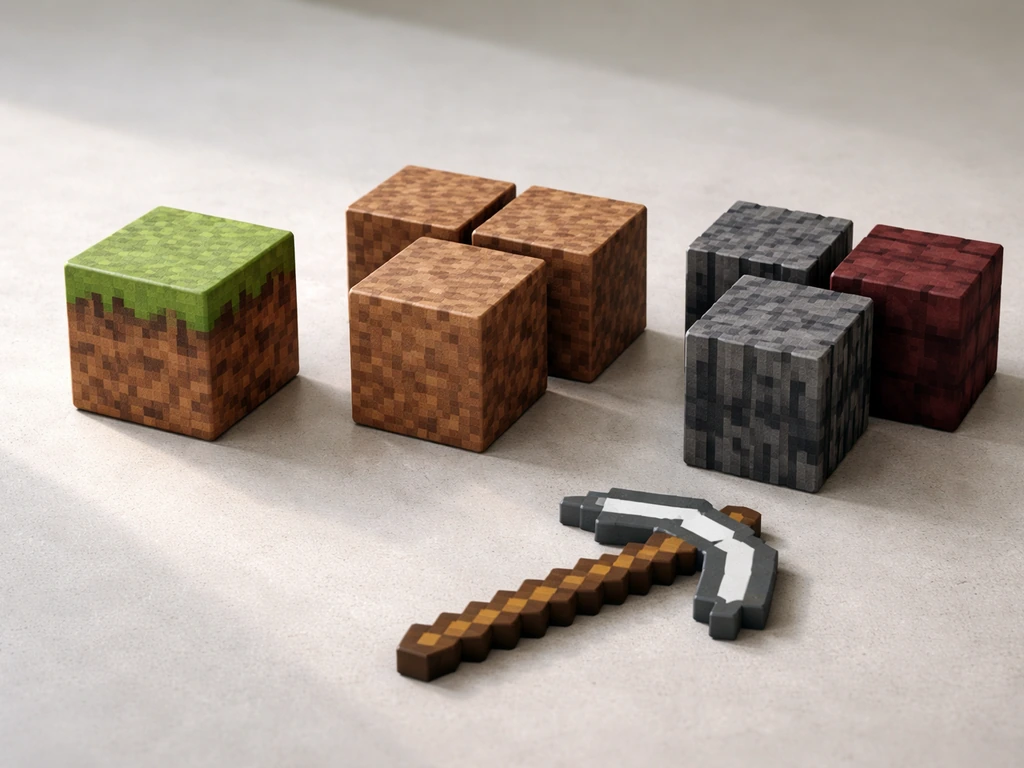
- At least one grass block obtained with a Silk Touch tool (breaking it without Silk Touch just gives you dirt, which is useless as a source)
- Several regular dirt blocks (not coarse dirt, not rooted dirt; those are not valid spread targets)
- Shroomlights, glowstone, or sea lanterns for lighting (Shroomlights emit light level 15, which is the max)
- Glass or other transparent blocks to create a ceiling that lets light pass through
- A relatively clear, flat area away from lava flows
The step-by-step attempt
- Find or build a flat area in the Nether. Basalt deltas and soul sand valleys are chaotic; a cleared section of a Nether fortress or flat netherrack area works better.
- Place a 3x3 or larger platform of regular dirt blocks. Import these from the Overworld since the Nether has none.
- Place your Silk Touch grass block in the center of the dirt platform.
- Build a glass or transparent block ceiling directly above the platform, at least 2 blocks above the grass. This lets light through without being opaque.
- Place Shroomlights (or glowstone) above the glass ceiling so every block of space above the grass and dirt reads at light level 9 or higher. Aim for 12 to 15 to be safe.
- Make absolutely sure no opaque blocks are sitting directly above any dirt block. If anything is blocking the light path from above the dirt, remove it.
- Check that no lava is flowing anywhere near or above the platform. Even one lava block above a dirt tile kills that tile's eligibility.
- Stay in the area or keep the chunk loaded. Grass spread depends on random ticks, and those only happen in loaded chunks.
- Wait. This can take several in-game minutes to many minutes of real time. Random ticks are not instant.
The glass ceiling trick is key here. Grass can grow and spread under transparent blocks like glass, fences, or torches as long as light can still pass through. That's how you create a controlled, lava-free, high-light environment inside the Nether. Without the ceiling, you're just leaving the grass open to the ambient lava glow of the Nether, which usually doesn't hit level 9 consistently enough to sustain spreading.
How to tell if it's working (and why it probably isn't)
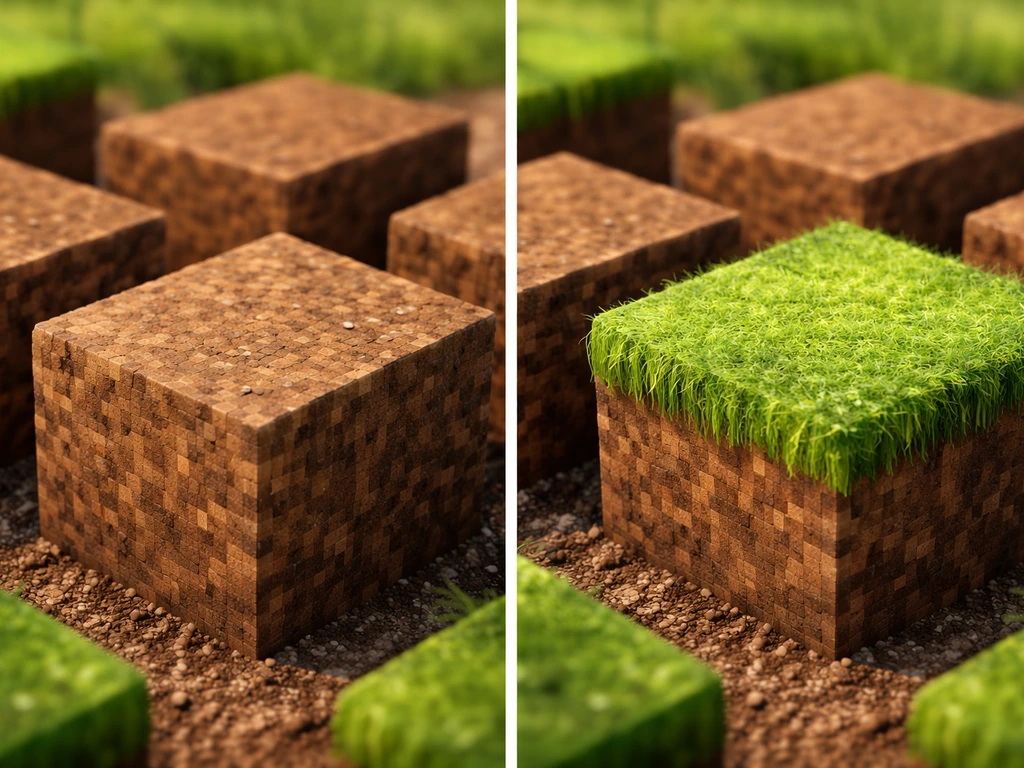
Grass spread is subtle. The clearest sign it's working is noticing that one or more of your surrounding dirt blocks has turned green on top. Check the edges of your platform after a few minutes of chunk-loaded waiting. If none of the dirt has converted after 10 to 15 real-time minutes of being present in the area, something is blocking the attempt.
Common reasons it fails
- Light level above the source grass is below 9: use a light-level display (F3 screen in Java Edition shows local light level) to check the block directly above your grass block
- Light level above the target dirt blocks is too low: the check happens on the block above the dirt, not the dirt itself
- An opaque block is sitting above one of the dirt blocks: even a single netherrack or soul sand block overhead disqualifies that tile
- You used coarse dirt or rooted dirt instead of regular dirt: these are not valid spread targets regardless of light conditions
- The chunk unloaded: if you walked away from the area, random ticks paused; you need to stay within chunk-loading range
- Your source block dropped to dirt: if the grass block you placed was covered even briefly or starved of light, it reverted to dirt and there's no longer a source for spreading
The F3 debug screen in Java Edition is your best friend here. It shows you the light level at your cursor position, so you can point at the block above your grass or above each dirt block and confirm the numbers before you wait around for nothing.
When grass won't grow: Nether-friendly alternatives for the green look
If you're going through all this for aesthetic reasons, there's a much easier path. So if you're wondering whether grass can grow in Fall in Stardew Valley, the answer is different because that game has its own seasonal growth rules grass grow in Fall in Stardew Valley. In Stardew Valley, the behavior of grass is tied to the seasons, so it can regrow depending on when you check grass regrow in Stardew Valley. The Nether has its own 'overgrown' blocks that are far better suited to the environment and honestly look great in builds.
Warped Nylium: the Nether's answer to grass
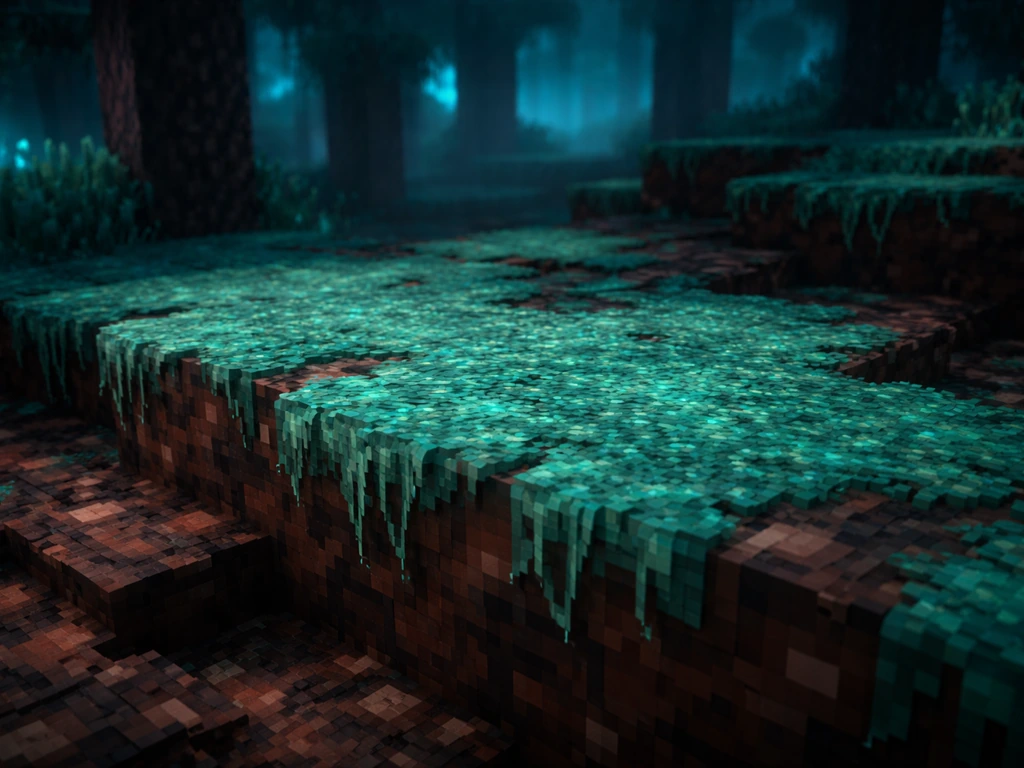
Warped Nylium is the closest thing the Nether has to a green, living surface block. It's a teal-green overgrown netherrack that spawns naturally in warped forest biomes and can be collected with Silk Touch just like grass blocks. It looks genuinely lush, it supports warped fungi and vegetation on top, and it behaves similarly to grass in concept but within the Nether's own ruleset. The catch: Nylium decays into netherrack if you place an opaque block directly above it, just like grass dies in the Overworld when you bury it. Keep it open or covered with transparent blocks to maintain it.
Crimson Nylium for a different vibe
If you want something that reads more like mossy undergrowth, Crimson Nylium from the crimson forest biome gives a reddish-pink overgrown surface. It works by the same mechanics as Warped Nylium and pairs well with crimson fungi and vines.
Other options worth considering
- Moss blocks (if you're willing to import them): they don't spread naturally in the Nether either, but placed moss gives a green surface texture and can be bonemealed to generate moss carpets and azalea in controlled builds
- Vines and hanging vegetation draped over structures can break up the harsh Nether look with green accents
- Shroomlights embedded in flooring or walls serve double duty as lighting and organic-looking texture
- Placing warped or crimson fungi on Nylium creates a 'forest floor' feel that no amount of overworld grass can replicate in this dimension
For players who have already experimented with grass growth in other tricky conditions, like getting grass to grow under fences or in shaded Minecraft builds, the lighting logic here is similar but the Nether makes it dramatically harder because you're doing everything without sky light.
Quick checklist for different Nether setups
Depending on what you're actually trying to build, here's where to focus your energy:
| Your goal | Best approach | Key thing to get right |
|---|---|---|
| Test if grass can spread at all in the Nether | Silk Touch grass block + imported dirt + glass ceiling + Shroomlights | Light level 9+ above source, no opaque blocks above any dirt tile |
| Build a green-looking Nether floor | Warped Nylium collected with Silk Touch | Don't place opaque blocks above it or it decays to netherrack |
| Create a lush forest-feel area in the Nether | Warped Nylium base + warped fungi + shroomlights + vines | Keep the ceiling transparent or open for the Nylium to persist |
| Permanently place grass as decoration (not spreading) | Silk Touch grass block placed in a lit, enclosed spot | Light above it must stay at 9+; use glass ceiling and shroomlights |
| Replicate Overworld grass spreading behavior | Not currently possible in vanilla Nether without significant workarounds | Accept that Nylium is the functional Nether equivalent |
The honest next step is this: if you just want to confirm the mechanic, set up the Silk Touch grass block test with a glass ceiling and Shroomlights and give it 15 minutes of loaded gameplay. If nothing spreads, you have your answer. If your actual goal is a green Nether build, skip straight to Warped Nylium because it's purpose-built for this dimension and you'll spend a lot less time fighting the game's own rules. If you are specifically wondering, does grass grow back in Minecraft in the Nether, the short answer is that it does not naturally spread under normal conditions.
FAQ
If I bring a grass block into the Nether with Silk Touch, will it spread by itself?
No. Even if you paste a grass block into the Nether with Silk Touch, it will not naturally start spreading like it does in the Overworld, because the Nether lacks the right light and sky-light-driven setup that the spread checks rely on.
Why didn’t my grass spread when my Nether base was lit?
Your grass can fail to spread even when lighting feels “bright” because the relevant checks look for higher block-light levels at specific heights. Use the F3 debug screen to verify the light level at the block above the grass and above each dirt candidate, not just the light source you placed.
Does chunk loading affect whether Nether grass spreading will trigger?
Loading matters. If the chunks containing the grass and the dirt are not loaded during the random tick window, the conversion attempt can’t occur. Plan to keep the area chunk-loaded (walk around it, use a reliable loading spot, or avoid leaving it unloaded) for the full waiting period.
Can grass spread in the Nether if the dirt is covered or placed under slabs, blocks, or other structures?
Yes, grass can convert nearby dirt only when the “target” dirt is eligible and exposed correctly. If your dirt is under opaque blocks, partially covered, or you placed the grass on an invalid surface arrangement, the spread checks will not convert it even with perfect light.
If I remove my lights later, will the grass in the Nether turn back into dirt?
It can stop if the light drops. Since the Nether has no sky light, grass depends on block light, so if you later remove Shroomlights or torch-like sources, or your glass ceiling blocks become insufficiently lit, the grass may degrade to dirt and never recover.
Are Warped Nylium and Crimson Nylium the same as grass for spreading and survival rules?
Different grass-like blocks can behave differently. In particular, “overgrown” blocks like Warped Nylium have their own decay rules related to what is directly above them, so you should not assume their behavior will match vanilla grass exactly.
What’s the biggest mistake that makes Nether grass experiments inconclusive?
For a clean test, don’t rely on lava glow. Lava nearby can create inconsistent light and make results hard to interpret, so keep the test area sealed from ambient light sources, use a glass ceiling approach, and keep the platform layout simple and repeated.
Should I change blocks while waiting for grass to spread, or wait without touching anything?
Grass spread depends on random ticks, so changing the setup after ticks start can create misleading “maybe it worked” moments. Start with the final layout, confirm light levels with F3, then wait without altering blocks above or around the test area.
What should I use for a green Nether aesthetic if grass spreading is too unreliable?
If your goal is appearance, Warped Nylium is usually the fastest path because it is designed to exist in Nether biomes and gives a natural green look without trying to recreate Overworld grass mechanics. Use Silk Touch to collect it and place it in your build while respecting the “what’s above it” decay rule.
Is there any version-specific reason this might work for some players but not others?
Yes, but only within the Nether’s own constraints. If you place a grass block and then fully meet the lighting and placement requirements, you may see dirt convert and green tops appear, however it is still dependent on version, exact light levels, and tick timing.
Next Articles
Does Grass Grow in Fall in Stardew Valley? What to Do
Yes, grass regrows in Stardew Valley Fall. Learn the exact conditions, why it may stop, and what to do next.
Can You Grow Grass Over Gravel? How to Do It Right
Learn when you can grow grass over gravel and follow a step-by-step method for soil depth, drainage, seeding or sod, and
Do Wood Chips Help Grass Grow? When They Work and When Not
Learn when wood chips help grass grow, when they steal nitrogen, and step-by-step how much to apply and seed options.