
Yes, grass does grow in Fall in Stardew Valley. It spreads normally just like it does in Spring and Summer, the only difference is that it turns orange and yellow instead of staying green. The season that actually stops grass from spreading is Winter, not Fall. So if you are in Fall and your grass seems sparse, the season itself is not the problem.
Does Grass Grow in Fall in Stardew Valley? What to Do
Marcus Volkmann
26 Apr 2026
What 'grass growth' actually means in the game
When players talk about grass growing or spreading in Stardew Valley, they mean the natural grass patches that appear on tillable soil tiles across your farm. These are the tufts your animals eat and that you can harvest with a scythe for fiber. Each day, an existing grass patch has a chance to expand into adjacent unoccupied tillable tiles. The spread probability is about 25% per eligible neighboring tile. This is a completely different system from crops, decorative flooring, or anything you place intentionally as a permanent fixture.
There is also a Grass Starter item, which is a seed-like object you can plant to create a new grass patch from scratch. Once placed, that patch follows the same daily spreading rules as any natural grass. The two systems work together, but they are not the same thing. If you want to restore bare areas, the Grass Starter is your direct tool. Natural spread just handles the gradual fill-in over time.
How Fall compares to the other seasons
Fall is essentially Spring and Summer with a different color palette for the grass. Growth behavior does not change. The wiki is clear that grass changes to orange and yellow in Fall but continues to spread daily using the same 25% adjacency check. Winter is the exception that breaks the pattern. Once Winter starts, grass stops spreading entirely, though existing patches do stay on your farm rather than disappearing. Weeds also get cleared at the start of Winter, and tilled soil resets, which can reduce the number of adjacent tillable tiles available if grass were somehow spreading then anyway.
| Season | Grass Spreads? | Grass Color | Notes |
|---|---|---|---|
| Spring | Yes | Green | New logs, rocks, and grass patches also spawn at season start |
| Summer | Yes | Green | Normal spread behavior, no special rules |
| Fall | Yes | Orange/Yellow | Color changes but spread mechanics are identical |
| Winter | No | N/A (existing patches stay) | Spread halts completely; existing grass survives but does not expand |
How to check whether your grass can actually spread
The mechanic sounds simple but there are real layout reasons why grass might seem stuck even in Fall. It helps to know whether you can also expect grass to grow in the Nether, since that world has very different rules grass seem stuck even in Fall. Here is how to diagnose whether your farm setup is actually allowing spread.
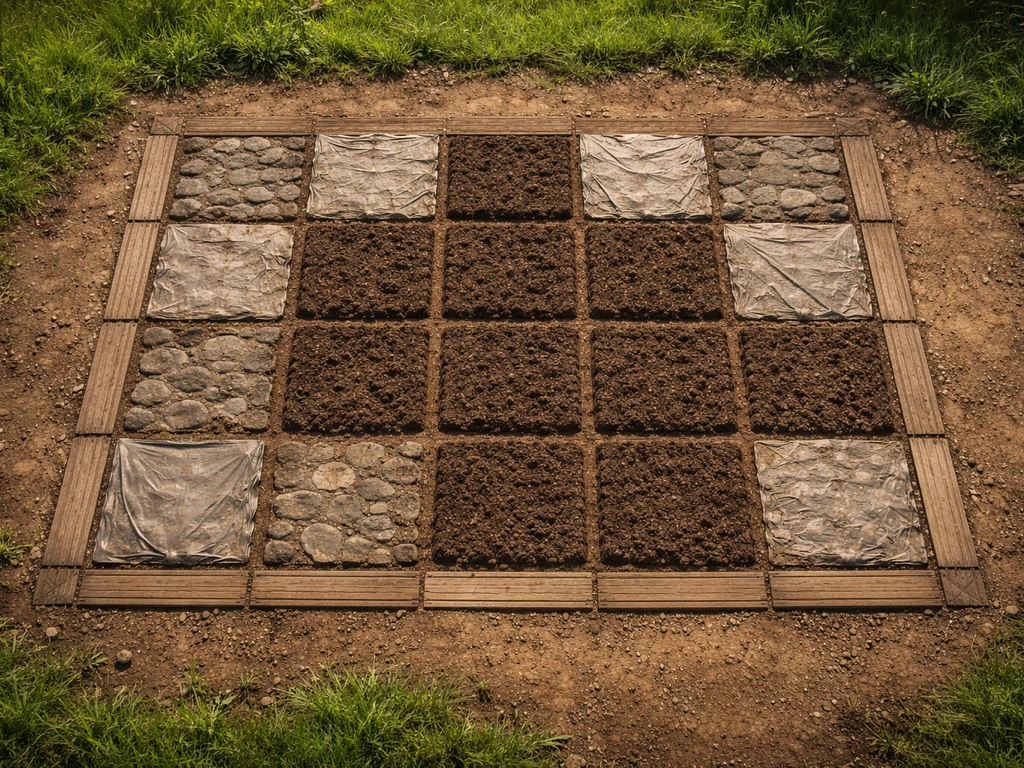
- Tillable soil only: grass can only spread onto tillable soil tiles. If you have placed paths, flooring, or other non-tillable surfaces around your grass, those act as hard walls and stop expansion in that direction.
- Adjacent tiles must be unoccupied: grass will not spread into a tile that already has something on it, whether that is a crop, a placed object, a building footprint, or another type of ground cover.
- You need existing grass to spread from: if your farm has no grass patches at all, there is nothing to spread. Daily spread only adds tiles from existing patches. You need at least one starting patch via a Grass Starter or a naturally occurring tuft.
- Fences and dense layouts block adjacency: if your grass is enclosed by fences or completely surrounded by structures, it has no eligible neighboring tiles to expand into even if the conditions are otherwise right.
- Check your farm layout for open tillable soil: walk the edges of your existing grass. If every adjacent tile is a path, crop row, fence, or building, the grass is essentially landlocked and will not cover more ground.
Grass isn't spreading in Fall: what to do
If you are standing in Fall looking at bare patches and wondering why nothing is filling in, work through this list before assuming it is a bug or a season restriction. For a Minecraft-specific case like whether grass can grow under fences, you also need to check the exact block placement and nearby conditions can grass grow under fences in Minecraft. In Minecraft, the answer is different: grass does spread and can regrow after you break it, but it depends on the blocks and surrounding conditions grass regrow after you break it.
- Plant Grass Starters on bare tillable soil. This is the fastest fix. Place them on open areas where you want coverage, and the new patches will begin spreading from those spots immediately.
- Remove or reposition paths and flooring that are blocking adjacency. Even a single row of stone path between two grass patches can stop them from merging.
- Open up fenced-off areas if your animals are not getting enough grass. Grass inside a completely closed pen relies entirely on the patches already inside it.
- Give it a few in-game days. The 25% spread chance per tile means it can look slow, especially if your existing patches are small. It is working, just not instantly.
- Check whether you are running mods. SMAPI mods can alter grass spread behavior, sometimes enabling Winter spread or disabling spread in other seasons based on custom map properties. If vanilla behavior does not match what you are seeing, a mod is likely involved.
- Do not panic about Fall specifically. Whatever bare areas you have in Fall, they can be addressed with Grass Starters now or by using the Winter 28 strategy heading into Spring.
The best timing strategy so you don't waste days
If you are serious about maximizing grass coverage, the single best move in the game is the Winter 28 trick. Any grass patches sitting on your farm on Winter 28 will multiply up to 40 times each when Spring 1 arrives, as long as you do not exit or close the game during that transition. This means placing Grass Starters on Winter 28 even though they will not spread during Winter pays off massively the moment the calendar flips. One starter becomes dozens of patches overnight.
Outside of that specific window, the general timing priority looks like this: use Spring and Summer to let natural spread do its work and build up a large grass base. Fall is a fine time to plant Grass Starters if you notice gaps, since the spread will continue right up until Winter starts. Avoid relying on Winter to do anything for grass coverage because nothing will spread. If you hit Winter with bare patches, your only move is to place starters and wait for the Spring 1 multiplication.
For players who keep animals, the practical goal is always to have enough grass inside or adjacent to your pasture that animals can graze without you burning through hay constantly. Fall is actually a decent time to assess that situation because you can see exactly what coverage you have, place starters where needed, and then benefit from the Winter 28 multiplication before the next grazing season begins.
Quick action checklist for Fall
- Confirm you have at least some existing grass on the farm. If not, buy and plant Grass Starters from Pierre's shop.
- Identify any paths, flooring, or fences that are boxing in your grass and remove what you can afford to.
- Place additional Grass Starters in large open bare areas so spread has multiple starting points.
- Let the game run for several days and watch the patches expand outward.
- On Winter 28, place any remaining Grass Starters you have on open tillable soil, then go straight to bed without closing the game.
- On Spring 1, enjoy the multiplication and plan your pasture coverage for the new year.
The grass system in Stardew Valley is honestly one of the more passive mechanics once you understand it. Fall is not working against you the way Winter does. The color change throws people off and makes it look like something is wrong, but the spread engine is running exactly the same as it was in Spring. Fix your layout, plant a few starters if you are bare, and let the tiles do their thing.
FAQ
If grass can spread in Fall, why are my grass tiles not expanding at all?
In Fall, spread only happens from existing grass onto adjacent eligible tilled tiles. If there are no eligible neighboring tillable tiles next to the tufts, nothing will grow. Check for bare tilled soil nearby, avoid paths, buildings, and decorations that block adjacency, and confirm you are looking at the natural grass tufts rather than decorative grass floor items.
Does grass spread stop when I place buildings, paths, or flooring in Fall?
Placing solid objects can block eligible adjacency because grass spreads only to unoccupied tillable soil tiles. It can still spread elsewhere if there is an eligible neighbor tile, but heavy landscaping can create “islands” where tufts are surrounded by non-tilled or occupied tiles, halting expansion in that area.
Will Grass Starter planted in Fall spread immediately, or does it wait for Spring?
Grass Starter creates a grass patch that follows the same daily spreading rules as natural grass, so it can expand during Fall. The only major “wait” is about the Winter 28 multiplication effect, which happens at the Spring 1 calendar flip, not because Fall delays spreading.
What happens to grass during Winter, do the tufts disappear or just stop spreading?
During Winter, grass stops spreading entirely, but existing patches remain on your farm. So if you start Winter with low coverage, you cannot rely on Winter to fill gaps, your practical fix is to plant Grass Starters and wait for the Spring 1 phase.
Does the Winter 28 multiplication require active playing at midnight, or can I log out right away?
To get the multiplication described in the article, you need the game to process the transition into Spring 1 while the patches are still present. If you exit or close the game during that transition window, the multiplication does not occur as intended, so plan to be in-game at the flip.
Is it worth placing Grass Starters on Winter 28 if I only have a few bare tiles?
Yes, because each existing patch can multiply massively at Spring 1, so even a small number of starters can snowball. The benefit is largest when you place them so they land on tillable spots that will become new grass patches immediately before the multiplication triggers.
Can weeds or tilled soil resets affect my grass coverage in late Fall?
Weeds are cleared at the start of Winter, and tilled soil resets can reduce or change which tiles are available as eligible adjacency. That means you can lose the “buffer” of tilled neighbors you were counting on, so it helps to scan your farm before Winter for empty tilled spots next to grass.
Do grass mechanics differ between regular farm and the other world (Nether, etc.)?
Yes. The article hints that grass can appear stuck in other worlds, meaning the rules are not necessarily the same as standard farmland behavior in Stardew Valley. If you are troubleshooting in a non-standard area, confirm that region uses the standard grass spread and eligibility rules.
How do I quickly tell whether a tile is eligible for grass to spread onto?
Grass spreads to unoccupied tillable soil tiles adjacent to existing grass tufts. If a tile is occupied, not tilled/ready as soil, or blocked by a non-tilled object like paths or structures, it will not count as an eligible neighbor, which is why “bare patches” can look unchanged even in Fall.
Next Articles
Can You Grow Grass Over Gravel? How to Do It Right
Learn when you can grow grass over gravel and follow a step-by-step method for soil depth, drainage, seeding or sod, and
Do Wood Chips Help Grass Grow? When They Work and When Not
Learn when wood chips help grass grow, when they steal nitrogen, and step-by-step how much to apply and seed options.

Will Potting Soil Help Grass Grow? What Works and What Fails
When potting soil helps grass grow, when it fails, and how to prep, apply, seed, water, and troubleshoot bare spots.